
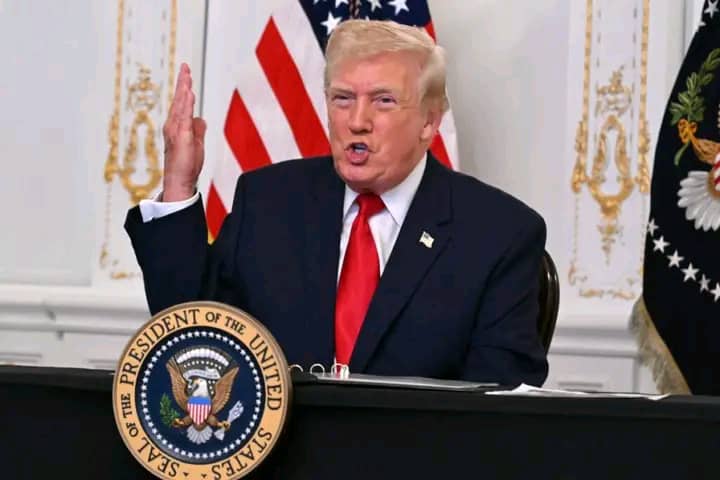
President Donald Trump has issued a stark warning to Iran claiming a major war escalation if Iran peace process fails.
He announced this via his social media handle on Wednesday, 8th of April 2026.
Trump had threatened to rain “hell” on Tehran, demanding Iran reopen the Strait of Hormuz a conduit for roughly a fifth of the world’s oil and natural gas supply which Iran had effectively closed since the U.S. and Israel began the war in late February.
The brinkmanship unfolded against a backdrop of intense regional diplomacy.
Pakistan’s army chief, Field Marshal Asim Munir, was in contact throughout the night with U.S. Vice President JD Vance, special envoy Steve Witkoff, and Iranian Foreign Minister Abbas Araqchi, as mediators scrambled to prevent further escalation.
Iran sent a 10-point response to proposals under discussion, which a U.S. official described as “maximalist,” while Trump told reporters it was “significant” but “not good enough,” adding it was “highly unlikely” he would extend his deadline again.
Iran, for its part, warned it would retaliate against energy and water facilities in Gulf states if Trump followed through on his threatened strikes.
With just 90 minutes to spare before the deadline, a breakthrough emerged.
Trump announced he had agreed to a two-week ceasefire with Iran, provided Tehran agreed to a complete and immediate opening of the Strait of Hormuz, while negotiations mediated by Pakistan continue.
Trump described Iran’s 10-point peace proposal as a “workable basis on which to negotiate.”
Even China Iran’s biggest trading partner quietly worked behind the scenes to find a pathway toward the ceasefire, according to officials briefed on the matter.
Markets responded swiftly to the news, with global oil prices falling sharply and U.S. stock futures pointing higher though analysts cautioned that the underlying issues, from Iran’s nuclear program to regional hostilities, remain far from resolved.