
Lucky Obukohwo, Reporting
Nigeria’s Minister of Defence, Christopher Musa, has remained resolute, maintaining that those killed in the Jilli airstrike in Borno State were not innocent civilians but individuals in connection with the insurgent support networks.
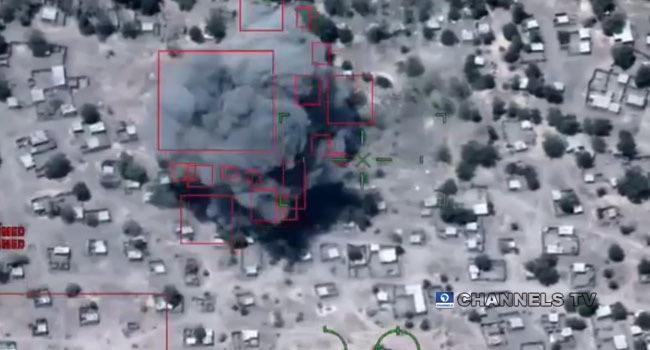
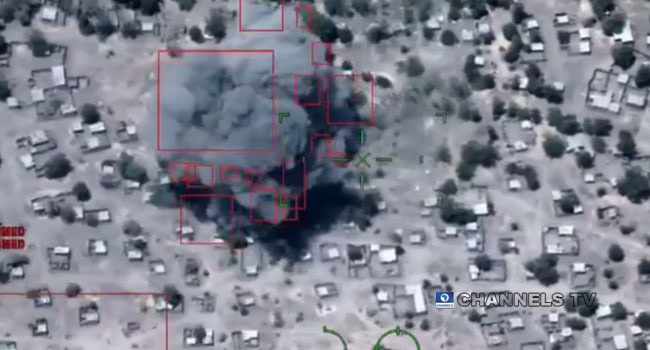
Recall that on April 11, 2026, a Nigerian Air Force airstrike targeted what it described as an Islamic State West Africa Province (ISWAP) logistics hub in the Jilli axis, a border area between Borno and Yobe states in North East Nigeria.
However, Amnesty International and local sources reported that the strike hit a market in Jilli, killing over 100 people, with some estimates running as high as 200, including traders and buyers.
For the Nigerian Air Force (NAF), it has defended the operation as a “precision airstrike” targeting a known terrorist enclave and logistics hub, claiming the location is used for ISWAP activities.
Speaking after a high-level security meeting led by President Bola Ahmed Tinubu, Musa said the military acted on solid and authenticated intelligence and struck a location long identified as a logistics hub for terrorists.
“There was no innocent person there. Anybody in that location knew what they were doing. They were there for business with terrorists,” he said.
The airstrike has triggered backlash over alleged civilian casualties, but Musa dismissed claims of error, stressing that the operation followed careful planning and verification.
“We moved based on intelligence, we identified the location, and we hit the target. It was a deliberate operation,” he said.
According to him, Jilli is not a conventional settlement but a restricted zone where insurgents and their collaborators meet to exchange supplies, including food, fuel and other materials that sustain their operations.
“That place is not a normal civilian market. It is a point where terrorists meet with those who support them, people who bring in supplies,” he said.
Musa pointed out to strong financial incentives driving the activity, noting that traders knowingly take the risk because of high returns.
“If you take a bag of rice there, you can sell it for as much as N150,000. The attraction is huge. People go there deliberately to make money, fully aware of who they are dealing with,” he added.
He argued that anyone who knowingly supports insurgents cannot be considered innocent under the laws of armed conflict.
“He who supports a terrorist is one of them. Your actions enable them to survive, to fight, and to kill others. That makes you part of the system,” he said.
While acknowledging that some individuals may be coerced, Musa drew a firm line between victims and willing collaborators.
“There are people who are forced, who are victims themselves, that is different. But those who willingly go into these areas to trade with terrorists are not innocent. They made that choice,” he said.
He also challenged casualty figures reported after the strike, questioning the absence of verified evidence.
“Did anybody show pictures? Did anyone confirm those numbers?” he asked.
Musa stressed that cutting off supply chains remains critical to weakening insurgents in the North-East, warning that anyone who operates within such zones exposes themselves to military action.
“These logisticians are the ones sustaining them. Without them, the terrorists cannot operate. If Nigerians collectively refuse to support these groups, this war can end much faster,” he noted.