
Lucky Obukohwo Reporting
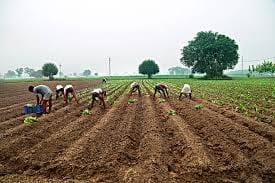
The Edo State Government has verified and registered between 14,000 and 15,000 farmers across the state’s 18 local government areas as part of efforts to ensure that federal agricultural interventions get to genuine farmers rather than non-farming beneficiaries.
The State Commissioner for Agriculture and Food Security, Jerry Uwangue, disclosed this while addressing journalists in Benin City, noting that the exercise was initiated by Governor Monday Okpebholo to tackle the long-standing challenge of diversion of agricultural support to individuals who are not actively engaged in farming.
According to Uwangue, officials from the Ministry of Agriculture and Food Security conducted a statewide profiling exercise, visiting all 18 local government areas to identify and register real farmers.
The process involved capturing details of their farming activities, locations of their farms, National Identification Numbers (NIN), and physical verification of their farms before inclusion in the state’s agricultural database.
According to him, the verified database is designed to improve transparency and accountability in the distribution of federal agricultural programmes and other government interventions.
“We have between 14,000 and 15,000 farmers registered with the ministry today, and the number is still increasing because profiling is ongoing,” he said.
“We forwarded the verified database to the Federal Ministry of Agriculture and Food Security so that every intervention coming to Edo will be based on the actual number of farmers in the state,” he said.
Uwangue noted that the verification process was designed to prevent duplication and ensure transparency, stressing that each farmer’s NIN was linked to the registration while ministry officials physically inspected farms to confirm ownership, crop type and farm size.
He explained that the verified database has already enabled Edo State to benefit from federal support, including the allocation of 22,000 bags of fertiliser, adding that the state’s share of 8,000 bags would be distributed directly to smallholder farmers rather than through political channels.
The commissioner said the new system marks a departure from previous practices, insisting that future interventions, including fertilisers, improved seedlings, agrochemicals, farm equipment and funding, would be delivered directly to verified farmers.
He appealed to farmers who are yet to register to take advantage of the ongoing profiling exercise through agricultural extension desks established in all 18 local government areas, noting that the database would remain the basis for accessing future government agricultural programmes.
The commissioner further said the initiative forms part of the state government’s broader strategy to strengthen food production, improve accountability in agricultural interventions and build a reliable database that would guide policy planning and attract more federal support to Edo’s agricultural sector.