
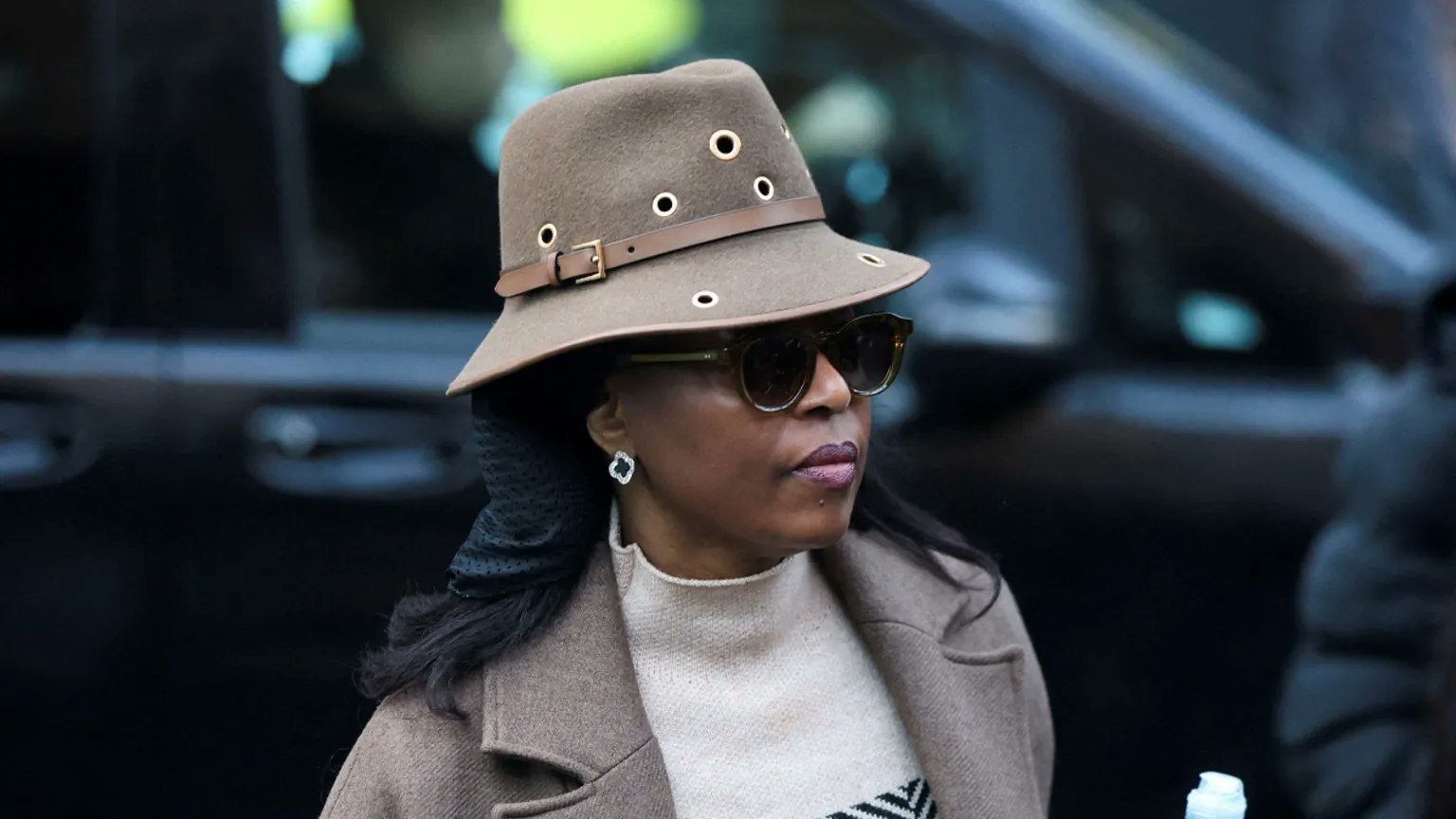
Former Nigerian Minister of Petroleum Resources Diezani Alison-Madueke on Monday took the witness stand at Southwark Crown Court in London, delivering her most direct personal denial yet since her landmark bribery trial opened in January telling the court she did not abuse her office and never sought or accepted corrupt payments of any kind.
“I can state categorically at no time did I ask for, take, or seek a bribe or bribes of any sort from any of these persons,” Alison-Madueke told the court.
Giving evidence at Southwark Crown Court in London, Alison-Madueke said: “I did not abuse my office during that period.” She denies five counts of accepting bribes and a charge of conspiracy to commit bribery.
Alison-Madueke, 65, who is currently out on bail, was minister from 2010 to 2015 under President Goodluck Jonathan and chaired the Organisation of the Petroleum Exporting Countries (OPEC) for part of that time. Under the United Kingdom’s anti-bribery law, she faces up to 10 years in prison and an unlimited fine.
As reported by Vanguard News, the former minister is accused of receiving £100,000 in cash, chauffeur-driven cars, private jet flights to Nigeria, refurbishment work and staff costs at several London properties, school fees for her son, products from high-end shops such as Harrods and Louis Vuitton, and further private jet flights.
The UK court also heard how bank cards belonging to Nigerian petroleum and aviation magnate Kolawole Aluko and his company Tenka Limited paid over £2 million for shopping sprees at Harrods. Aluko rose to prominence during Alison-Madueke’s tenure, when Nigeria’s government awarded lucrative oil blocks to companies linked to him on a no-bid basis.
Alison-Madueke told the court that the logistics and financial dealings of her work trips were handled by the Nigerian National Petroleum Company, and insisted that a string of services arranged for her were subsequently reimbursed.
Her lawyer maintains that she was merely a “rubber stamp” for official decisions she had no real influence over, and told the court that payments were made on her behalf because Nigerian ministers are forbidden from having bank accounts abroad, and that the payments were reimbursed.
The defence has also mounted a procedural challenge, arguing that both the British and Nigerian governments denied the former minister access to crucial documents needed for her defence.
According to International Consortium of Investigative Journalists, the lead prosecutor Alexandra Healy told the court: “It was improper for Alison-Madueke to receive financial and other advantage from people with substantial interests in the oil industry who profited from government generated business. There is an important public interest in ensuring that conduct in our country does not further corruption in another country.”
Among the most damaging evidence before the jury are intercepted phone calls. In one exchange recorded by U.S. prosecutors, Alison-Madueke was heard telling Aluko and Jide Omokore: “We stuck our necks out regarding the SAA and supported it” — a reference to the Strategic Alliance Agreements, which the Central Bank of Nigeria determined were designed to funnel state income into private hands.
In another call, after Aluko purchased an $82 million yacht, the Galactica Star, she was heard advising them “to be a bit more careful” not out of moral objection, but because the spending might attract scrutiny.
Two others stand trial alongside Alison-Madueke: Olatimbo Ayinde, 54, an owner of Nigerian oil companies, who denies two charges of bribery; and Alison-Madueke’s brother, former archbishop Doye Agama, 69, who denies conspiracy to commit bribery.
According to PM News Nigeria, an operative of Nigeria’s Economic and Financial Crimes Commission (EFCC) also testified virtually before the court in February from the Federal High Court in Abuja, in a proceeding enabled by mutual legal assistance arrangements between the two countries.
The trial, presided over by Justice Thornton, is scheduled to conclude by April 24, 2026.