
Toba Owojaiye – Lagos, Nigeria
In a stunning verdict that has sent political shockwaves across Nigeria, the Federal High Court in Lagos has dismissed all ₦6.9 billion fraud and money laundering charges brought against former Ekiti State Governor, Ayodele Fayose, by the Economic and Financial Crimes Commission (EFCC).
Truth Live News gathered that the August ruling, delivered by Justice Chukujekwu Aneke on Monday, July 15, 2025, came after a prolonged seven-year legal battle filled with delays, disputed testimonies, and shifting prosecutorial tactics. The court upheld Fayose’s no-case submission, declaring that the prosecution failed to establish a prima facie case against him or his company, Spotless Investment Ltd.
“Justice has finally prevailed,” Fayose declared outside the courtroom, beaming. “This victory is not just for me but for every Nigerian who believes that truth will always outlive propaganda.”
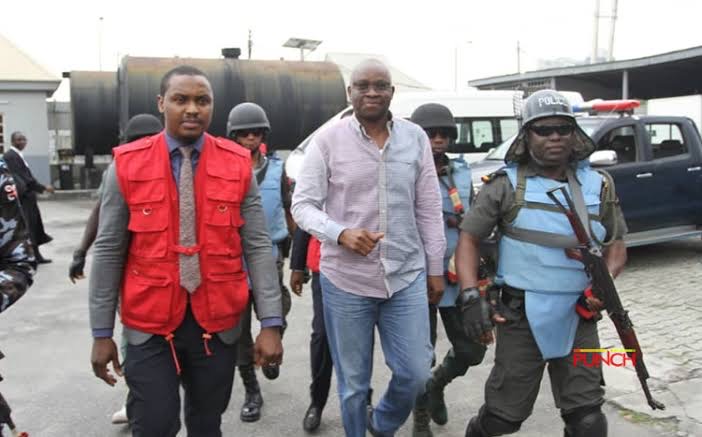
First arraigned in October 2018, Fayose faced 11-count charges ranging from criminal breach of trust to receiving illicit campaign funds during his 2014 gubernatorial re-election. The EFCC alleged that he benefitted from ₦1.2 billion and US$5 million traced to former Minister Musiliu Obanikoro, supposedly disbursed for electioneering via Abiodun Agbele.
But Fayose’s legal team, led by Kanu Agabi SAN and Olalekan Ojo SAN, argued vigorously that the prosecution had no compelling evidence and had failed to prosecute key alleged co-conspirators. Justice Aneke concurred, stating that the EFCC “presented speculative and circumstantial claims without the weight of legal proof.”
The ruling delivers a major blow to the EFCC’s credibility and ongoing anti-corruption efforts. The agency had earlier vowed to make Fayose a “test case” of its prosecutorial strength. Now, legal observers say the loss raises fundamental questions about the EFCC’s investigative and evidentiary approach.
“This is a clear case of prosecutorial overreach,” said Barrister Helen Oboh, a Lagos-based constitutional lawyer. “You don’t drag a citizen through a decade-long legal ordeal without airtight evidence and expect the courts to rubber-stamp political pressure.”
Though the EFCC has not yet indicated whether it will appeal, internal sources suggest the agency may be reassessing similar cases still pending in court.
The acquittal hands Fayose, a vocal and often controversial PDP figure, a political lifeline. Once dismissed by critics as a fading political relic, he may now re-emerge as a senior statesman within opposition ranks or a rallying symbol for judicial fairness in politically motivated prosecutions.
“The cleansing fire of persecution has only refined me,” Fayose told reporters. “I stood against two presidents and I did not fall. Let this be a lesson: you can’t destroy a man whose soul is intact.”
While supporters celebrated outside the court, others took to social media expressing disillusionment with the justice system. Hashtags like #FayoseCleared and #EFCCFails began trending by mid-afternoon. Some hailed the judgment as a triumph for democracy, others decried it as another failure of Nigeria’s anti-graft crusade.
Fayose’s legal vindication underscores the fragility of Nigeria’s institutional trust. It sends a potent signal about the consequences of poor prosecutorial diligence and the need for depoliticized justice. The EFCC’s bruising defeat may embolden other high-profile defendants and weaken confidence in ongoing corruption probes.
Yet, this moment also reaffirms the power of the judiciary to stand independent. Whether it marks a new dawn of accountability or a missed opportunity for reform depends on what happens next.
As the gavel falls and the dust settles, one truth rings clear: Nigeria’s battle for justice must rise above spectacle and start delivering substance.
“I did not bow, I did not break,” Fayose said.
The nation watches, again reminded that in Nigeria, justice is often delayed, but not always denied.