
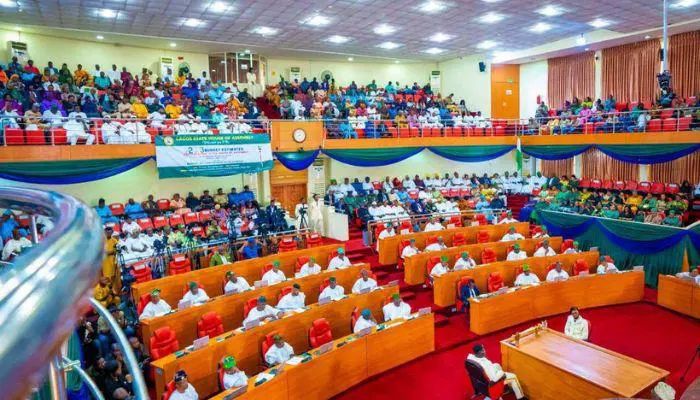
The House of Representatives on Wednesday, March 11, 2026, urged the Federal Government to commence construction of a railway corridor linking Benin City and Lagos to tackle growing insecurity and traffic congestion along the busy highway connecting the two cities.
The resolution followed the adoption of a motion moved during plenary by the lawmaker representing Ovia North-East/Ovia South-West Federal Constituency of Edo State, Omosede Igbinedion. The session was presided over by the Speaker of the House, Tajudeen Abbas.
Moving the motion, Igbinedion described Lagos and Benin City as major economic and population centres with heavy daily movement of people, goods and agricultural produce between them.
She noted that the strategic highway linking the two cities has become overstretched and increasingly unsafe for commuters.
“The Lagos–Benin highway is currently overburdened, plagued by traffic congestion, dilapidation and rising incidents of armed robbery, kidnapping and accidents,” she said.
According to her, the absence of a railway alternative along the corridor places strain on the national economy and endangers lives.
“We are concerned that the absence of a railway alternative on this critical route puts strain on the national economy, delays supply chains and stifles regional integration,” she added.
The lawmaker explained that constructing a modern railway line between Benin and Lagos would provide a safer, faster and more reliable means of transportation for commuters and businesses while easing pressure on the existing road network.
She also expressed concern that persistent insecurity along the corridor has discouraged interstate travel and commercial activities.
“The insecurity along the route continues to discourage interstate travel and commercial activity, especially for women, traders, students and farmers transporting produce,” she said.
Igbinedion added that investing in rail infrastructure along the corridor would boost economic activity and strengthen national security.
“An investment in railway infrastructure is not only an economic strategy but also a national security imperative, especially in vulnerable and high-traffic regions,” she said.
The motion received overwhelming support from lawmakers when it was put to a voice vote.
Following its adoption, the House urged the Federal Government, through the Federal Ministry of Transportation and the Nigerian Railway Corporation, to prioritise the development of the Benin–Lagos railway corridor under the National Transport Master Plan.
Lawmakers also recommended the inclusion of security components such as surveillance systems, railway police units and secured terminals in the design and operation of the proposed rail line.
The call for a rail link between Lagos and Benin City has gained momentum in recent years amid worsening traffic congestion and rising security concerns along the Benin–Ore–Lagos highway, one of Nigeria’s busiest transport corridors.
The route serves as a key gateway connecting the commercial hub of Lagos with the South-South and South-East regions, transporting thousands of passengers, traders and haulage vehicles daily.
Persistent gridlock, deteriorating road conditions and frequent reports of kidnapping and armed robbery have intensified demands from transport unions, business groups and state governments for an alternative mode of transportation.
Stakeholders believe extending modern rail infrastructure from Lagos to Edo State would significantly reduce travel time, ease pressure on the highway and improve the movement of agricultural produce and manufactured goods across southern Nigeria.
The proposal is also linked to ongoing efforts to expand Nigeria’s rail network beyond existing standard-gauge lines connecting Abuja–Kaduna, Lagos–Ibadan and Warri–Itakpe as part of broader plans to modernise the country’s transport system and boost regional trade.