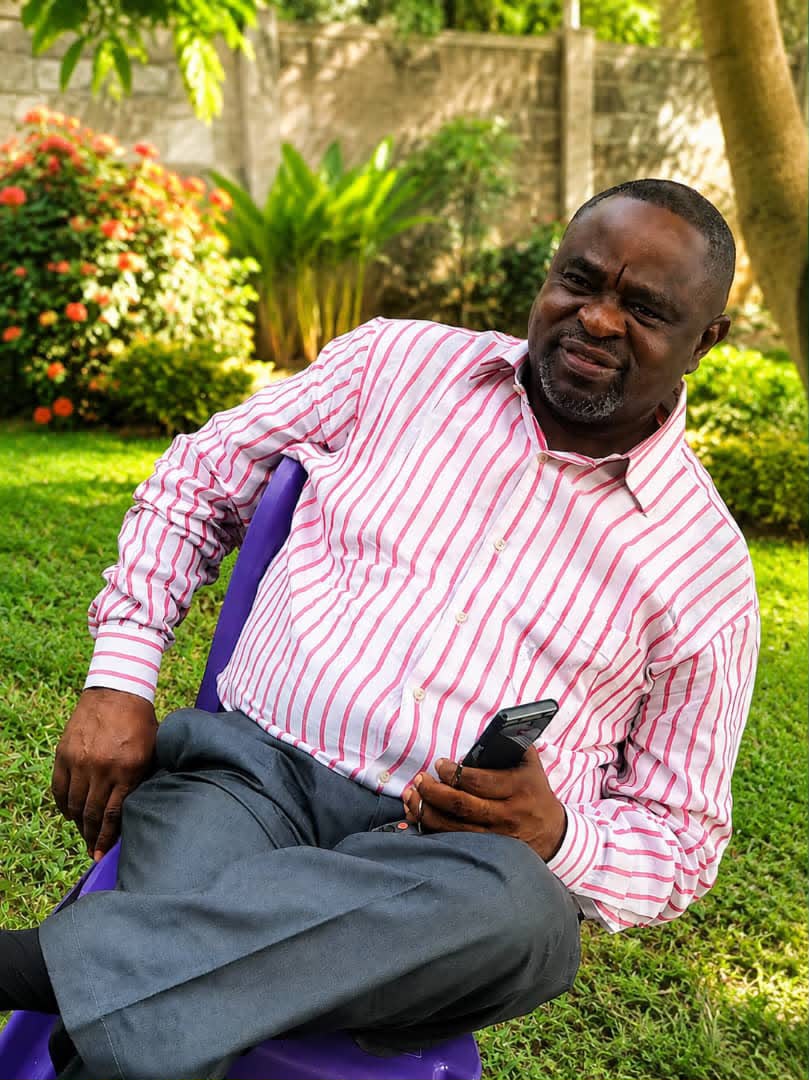


Former Catholic missionary Sandro Ferretto has married Sharon Jepng’ok, a Tugen woman from Baringo South, Kenya, in a traditional Koito ceremony in Seretion Village, Kasiela.
The marriage has drawn attention not simply because Ferretto is marrying, but because he was previously a Catholic priest who served the Baringo community for about 12 years.
His transition from Catholic priesthood to married life raises a fundamental question for Catholics and the wider public: what happens when a Catholic priest leaves the priesthood and chooses marriage?
Leadership report has it that Ferretto, an Italian-born missionary, was known in Kasiela and Mochongoi as Father Sandro.
During his years of missionary service, he celebrated Mass and worked among local communities. He later stepped away from active priestly ministry before marrying Jepng’ok.
However, the circumstances surrounding that transition are central to understanding the marriage.
Under Catholic Church law, priests in the Latin Church are ordinarily bound to celibacy. Leaving active ministry does not, by itself, automatically release a priest from the obligation of celibacy.
A priest who seeks to leave the clerical state and marry ordinarily requires the appropriate canonical process, including a dispensation from the obligation of celibacy.
The available account of Ferretto’s marriage does not explain whether he was formally laicized, whether he received a dispensation from celibacy, when that process occurred, or how the Catholic Church has formally classified his status.
Those details matter because they determine whether the marriage represents a priest who has legitimately left the clerical state and been released from the obligation of celibacy, rather than a serving Catholic priest simply deciding to marry.
The distinction is important for Catholics who may see images of a man once known as “Father Sandro” participating in a traditional marriage ceremony and wonder whether Catholic rules on priestly celibacy have changed or they have not.
In the Latin Catholic tradition, celibacy remains the ordinary discipline for priests. At the same time, Catholic law provides a formal route through which a priest can leave the clerical state and, with the required dispensation, be released from the obligation of celibacy.
Ferretto’s case therefore raises questions beyond the wedding itself.
Why did he leave active priestly ministry? Was marriage part of that decision? What process did he undergo before marrying? Does he remain associated with the Catholic Church in another capacity? And how does he describe the transition from missionary priest to husband?
Those questions are particularly relevant because Ferretto did not marry far removed from the community in which he had served. Instead, he returned to Seretion Village, where he had previously worked as a missionary, to take part in a traditional Koito ceremony with Jepng’ok.
The ceremony consequently brings together two distinct aspects of his life: his years as an Italian-born Catholic missionary in Kenya and his new identity as the husband of a Tugen woman.
But the cultural significance of the ceremony should not obscure the central religious issue.
For Catholics, the story touches on the meaning of priestly vocation, the discipline of celibacy and the possibility of leaving the clerical state.
For non-Catholics, it offers an opportunity to understand an aspect of Catholic practice that is often misunderstood: a former priest’s marriage does not necessarily mean that a serving Catholic priest has been permitted to marry.
The circumstances of Ferretto’s departure from priesthood therefore deserve as much attention as the wedding itself.
Until those circumstances are clarified, the most significant fact is not simply that “Father Sandro” has become a husband. It is that a man who spent years serving as a Catholic priest has moved from clerical ministry into married life, a transition governed by specific rules within the Catholic Church and one that raises important questions about vocation, celibacy, personal choice and the meaning of leaving the priesthood.
Most Viewed Posts
- Supporting Siminalayi Fubara: Why Rivers People Deserve Continuity Of Purpose In 2027 – Dr William Omuna
- President Tinubu’s Achievements That Strengthen Case For Second Term – Amuna
- Just In: APC Announces Date For Presidential Primary, Fixes Nomination Form At ₦100m
- EFCC Arraigns Gombe Magistrate Over Alleged ₦1.4m Bribery
- Court Schedules Trial of Former Anambra Governor in ₦4bn Case