
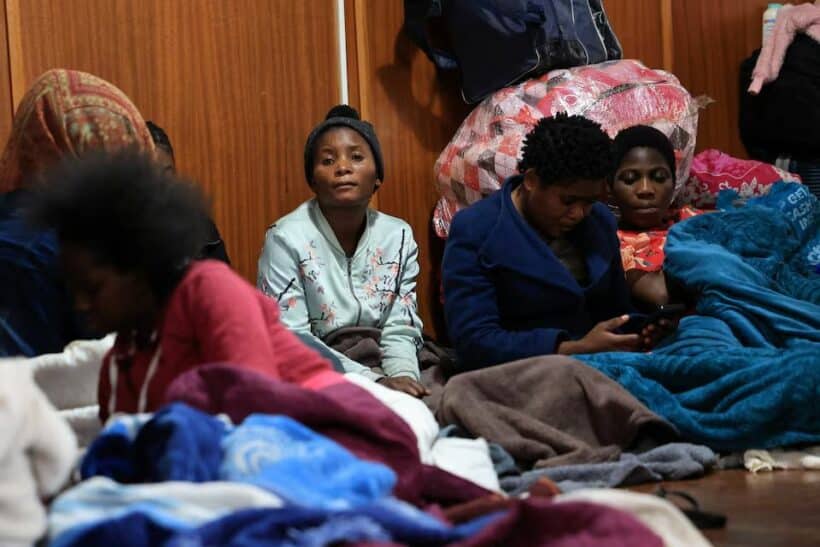
Growing anti-immigrant demonstrations in parts of South Africa have forced hundreds of foreign nationals to flee their homes and seek refuge in temporary shelters, raising concerns over a fresh wave of xenophobic violence.
In several towns across the Western Cape province, migrants from countries including Mozambique and Malawi have reportedly abandoned their communities after groups of protesters demanded that foreigners leave the area.
Among those affected is Mozambican national Lado Amido, who said he was forced to flee after a crowd arrived at his residence and ordered immigrants to leave. Fearing for his safety, he spent days hiding before finding refuge in a community shelter.
Local authorities and humanitarian groups say dozens of displaced migrants are now staying in public facilities, while some are considering returning to their home countries through voluntary repatriation programmes.
The unrest follows a series of anti-immigrant incidents reported across South Africa in recent weeks. Officials in Mozambique recently confirmed that several of their citizens were killed during attacks linked to rising tensions over migration.
South Africa has long struggled with periodic outbreaks of xenophobic violence, often fueled by claims that foreigners are responsible for unemployment, crime, and economic hardship. Despite limited evidence supporting these allegations, the narrative continues to resonate in some communities facing economic difficulties.
President Cyril Ramaphosa recently acknowledged concerns surrounding migration while condemning violence against foreign nationals. He emphasized the need to address migration challenges through lawful and orderly processes rather than vigilante action.
Community leaders in affected towns have also criticized residents who have taken matters into their own hands. Some local officials noted that many of the migrants targeted by protesters are legally residing and working in South Africa.
Several displaced families now face difficult decisions about their future. Parents have withdrawn children from school due to safety fears, while many adults are unable to return to work.
Some migrants described hiding in nearby mountains and wooded areas to avoid confrontation. Others said they witnessed large groups carrying sticks and other weapons during the demonstrations.
For many, returning home presents its own challenges due to poor economic conditions in their countries of origin. However, some displaced migrants say they would rather face financial hardship than remain in communities where they fear for their lives.
The latest incidents have renewed concerns among human rights organizations and regional governments about the persistence of xenophobia in South Africa and its impact on vulnerable migrant populations.