
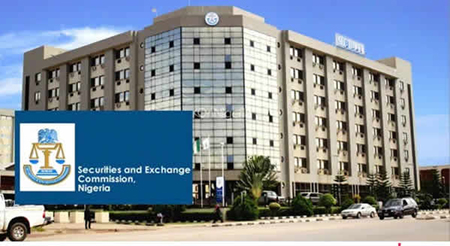
Nigeria’s financial regulator has ordered the immediate freezing of assets linked to several individuals and organisations suspected of involvement in terrorism financing.
The Securities and Exchange Commission (SEC) said it had directed all capital market operators to identify and freeze funds and economic resources belonging to 10 individuals and three entities recently added to the country’s sanctions list.
In a circular issued on Monday, the commission said the action followed approval by the Nigeria Sanctions Committee, in line with the Terrorism (Prevention and Prohibition) Act, 2022.
“All capital market operators are required to immediately identify and freeze, without prior notice, all funds, assets, and any other economic resources belonging to the designated persons and entities,” the SEC said.
The regulator added that affected individuals and organisations are now subject to a range of restrictions, including asset freezes, travel bans and arms embargoes.
It also instructed operators to report any action taken to the sanctions committee and submit suspicious transaction reports to the Nigerian Financial Intelligence Unit (NFIU) for further analysis.
According to the SEC, the directive goes beyond assets directly held by those listed. It includes funds owned jointly, indirectly, or controlled through third parties.
“This freezing obligation extends to all funds or other assets owned or controlled by the designated persons or entities, including those acting on their behalf or at their direction,” the commission said.
The SEC warned that failure to comply could expose financial institutions and market operators to criminal and civil penalties, as well as reputational risks.
The move is part of wider efforts by Nigerian authorities to curb the flow of funds to extremist groups and strengthen oversight of the financial system.
It follows a recent announcement by the government naming dozens of individuals and entities suspected of links to terrorism, with instructions for their assets to be frozen and transactions closely monitored.
Some of those listed are believed to have connections to banned groups such as the Indigenous People of Biafra (IPOB), Ansarul Sudan, and the Islamic State West Africa Province.
Officials say the sanctions framework is intended as a preventive measure to disrupt financial networks linked to terrorism and protect the integrity of Nigeria’s economy.