
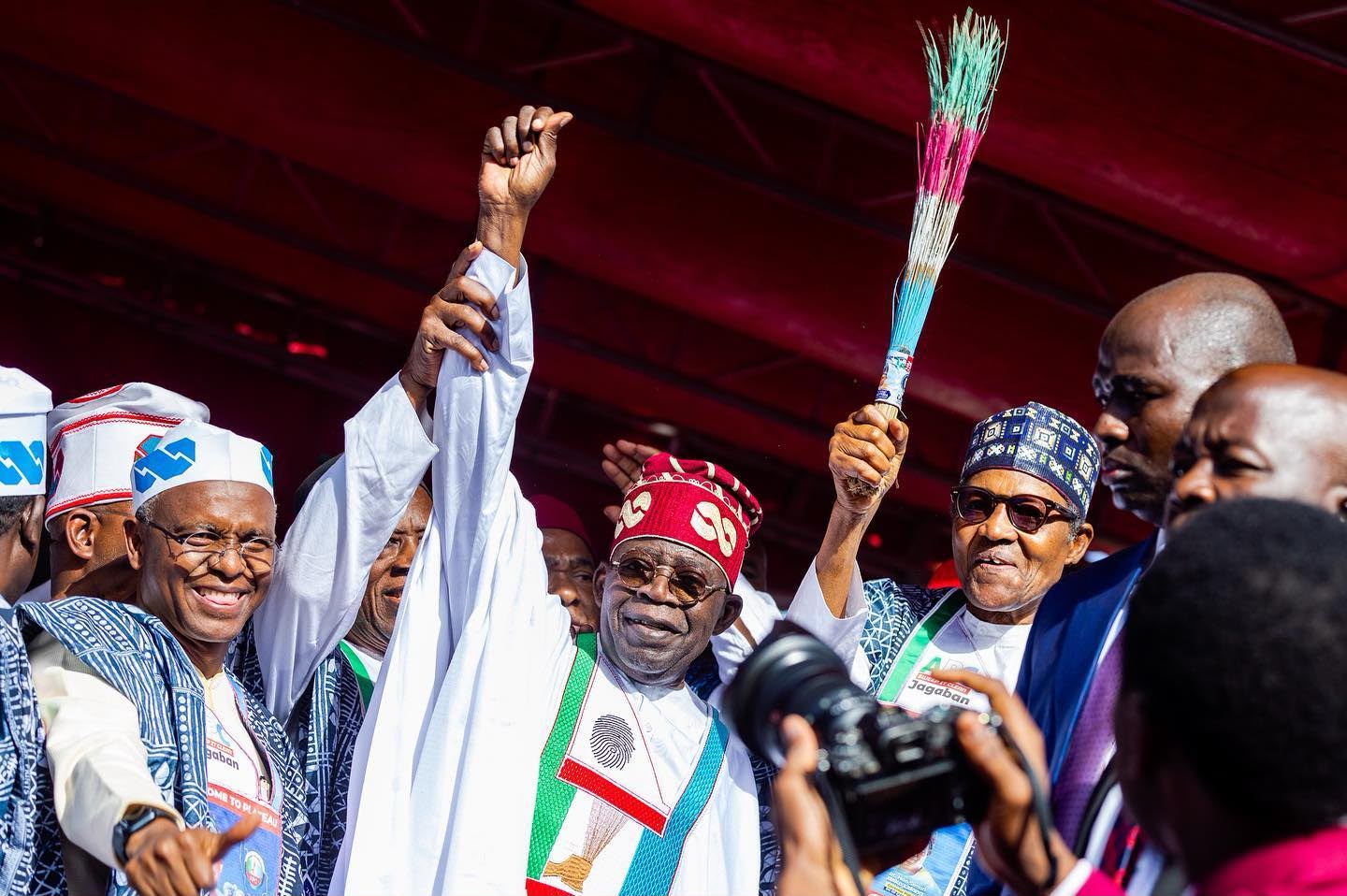
The suggestion that President Bola Ahmed Tinubu may not actively campaign across the states of Nigeria ahead of the 2027 general elections represents something far more troubling than a mere change in political strategy. It raises fundamental questions about the character of leadership, the sanctity of democratic accountability and the growing culture of political entitlement among Nigeria’s ruling elite. For a president seeking a renewed mandate from a people whose lives have been profoundly affected by economic hardship, insecurity and declining confidence in public institutions, the prospect of substantially limiting direct engagement with the electorate is both politically disturbing and morally difficult to defend. It reinforces the perception that those entrusted with political power have gradually come to regard Nigerians as spectators in a democracy that rightly belongs to them.
Democracy, in its truest sense, is not an inheritance reserved for a privileged political class, neither is the presidency a traditional stool to be occupied at the pleasure of powerful individuals and their political associates. It is a sacred public trust, periodically subjected to the scrutiny and judgement of the electorate. Any president seeking another mandate must be prepared to travel the length and breadth of the country, look Nigerians in the face, defend his record and explain why he deserves another opportunity to govern. Anything short of this, particularly in a country confronting enormous socioeconomic challenges, risks creating the impression that the presidency has become an imperial institution whose occupant considers himself above the ordinary obligations of democratic leadership.
What makes this development particularly disturbing is the dangerous precedent it could establish in Nigeria’s already fragile democratic environment. We are gradually witnessing what appears to be the institutionalisation of political despotism, the emergence of elected emperors and the enthronement of a monarchical mentality within institutions deliberately established to guarantee representative government. The arrogance of political power becomes most pronounced when those who exercise it begin to believe that electoral victory is guaranteed, regardless of their performance or the disposition of the people. A president who considers direct engagement with the electorate unnecessary risks communicating one unmistakable message: that the people are no longer central to the process through which political authority is acquired and sustained.
The late American President Abraham Lincoln famously described democracy as **”government of the people, by the people, for the people.”** Those words remain among the most enduring expressions of democratic responsibility. They remind us that political legitimacy flows from the people and must continually be sustained through accountability, openness and genuine public engagement. Unfortunately, Nigeria’s political establishment has increasingly demonstrated a disturbing tendency to reverse this principle, creating a system in which the people appear to exist for the convenience of those in government. Nigerians deserve considerably more than carefully choreographed television appearances, presidential statements prepared by media advisers and political rallies conducted by governors and party loyalists on behalf of an incumbent president. They deserve to hear directly from the man who seeks to continue governing their affairs.
There is also the unavoidable question of President Tinubu’s health and physical capacity to discharge the demanding responsibilities of his office. His extended European holiday has generated public speculation about his wellbeing, although speculation must never be mistaken for medical evidence. The President’s health is not a subject for malicious conjecture or political ridicule, but neither should legitimate public concerns be dismissed as irrelevant. Nigerians have experienced the consequences of prolonged uncertainty surrounding the health of their political leaders, and they are entitled to reasonable transparency regarding the capacity of anyone entrusted with the highest office in the land. If the President’s proposed campaign arrangements are entirely strategic, his handlers should explain that clearly. If health considerations are involved, Nigerians deserve an honest and responsible explanation rather than an atmosphere in which rumours are allowed to flourish.
President Tinubu has reportedly explained that the demands of governance and other official responsibilities would prevent him from attending every campaign rally. While no reasonable person expects a sitting president to abandon governance for electioneering, such an explanation does not place his decision beyond criticism. The President cannot reasonably expect Nigerians to accept that the responsibilities of an office he voluntarily seeks to retain for another four years constitute sufficient justification for substantially limiting his personal engagement with those whose votes he requires. Other incumbent presidents have had to reconcile the demands of governance with the obligations of electioneering. Tinubu should not be an exception. Leadership is not merely about occupying an office; it is about demonstrating the courage, commitment and personal responsibility required to justify continued public confidence.
The great South African statesman Nelson Mandela once declared, **”I am your servant. I do not come to you as a leader.”** That profound expression of humility captures the essence of responsible leadership. Unfortunately, what we increasingly observe in Nigeria is the opposite: a political culture in which elected officials expect unquestioning loyalty, demand public gratitude for performing their constitutional duties and surround themselves with an elaborate machinery of political praise singers. The presidency is not a royal inheritance, and Nigerians are not subjects of an emperor. They are citizens of a constitutional republic whose collective sovereignty must never be surrendered to the ambitions of any individual, political party or powerful establishment. No president, regardless of his political influence, should consider himself so indispensable that the electorate must accommodate his convenience rather than demand his accountability.
Even more troubling is the possibility that this campaign arrangement reflects a deeper confidence within the ruling political establishment that the outcome of the 2027 election can be secured without the President undertaking the difficult work of persuading the electorate. Such a perception, whether justified or otherwise, should concern every Nigerian who believes in the integrity of democratic elections. Political power in Nigeria has become dangerously concentrated around influential officeholders, party structures and networks of patronage. When those entrusted with authority begin to act as though elections are merely formalities preceding predetermined victories, democracy is gradually stripped of its substance. The greatest danger to a democratic society does not always come from soldiers overthrowing elected governments. Sometimes, it comes from elected politicians who progressively undermine the spirit of democracy while carefully preserving its outward appearance.
The distinguished British statesman Winston Churchill once observed that **”the price of greatness is responsibility.”** That responsibility cannot be exercised selectively, neither can it be delegated whenever its demands become politically inconvenient. Across Nigeria, families continue to confront the consequences of inflation, insecurity, unemployment and the declining purchasing power of their incomes. These are not abstract economic indicators to be discussed only in presidential conference rooms or at international investment summits. They represent the painful experiences of millions of citizens whose hopes and expectations are tied to decisions taken in Abuja. From struggling traders in Kano to unemployed graduates in Benin City, from farmers displaced by insecurity in Benue to families battling rising living costs in Lagos, Nigerians have legitimate grievances that cannot simply be delegated to political surrogates. A president seeking re-election should be eager to encounter these realities firsthand, listen to the frustrations of the people and explain why his policies deserve continued public confidence.
Ultimately, the 2027 presidential election must not become another demonstration of the arrogance of incumbency or the dangerous assumption that political power belongs permanently to a privileged few. President Bola Ahmed Tinubu must understand that Nigeria is a republic, not a monarchy, and that the presidency is a responsibility bestowed by the people, not an entitlement conferred by political godfathers. If he desires another four years in office, he owes Nigerians the courtesy of appearing before them, explaining his record and presenting a convincing case for their renewed confidence. His supporters may regard a limited campaign schedule as political strategy, but many Nigerians will understandably see it as another manifestation of the growing distance between their leaders and the people.
No Nigerian president should become so powerful that he considers the people too insignificant to meet, too inconsequential to persuade or too powerless to reject him. Nigeria must never become a republic governed with the arrogance of an empire.
Amb. Pastor Darlington Okpebholo Ray is a Media Consultant, Journalist, Human Rights Advocate and Socio-Political Commentator