

CROSS RIVER, CALABAR – Nigeria has young table-tennis talents at the grassroots, but stakeholders say discovering them is only the first step, as sustained funding, technical development, regular competition and wider exposure remain critical to turning potential into elite success.
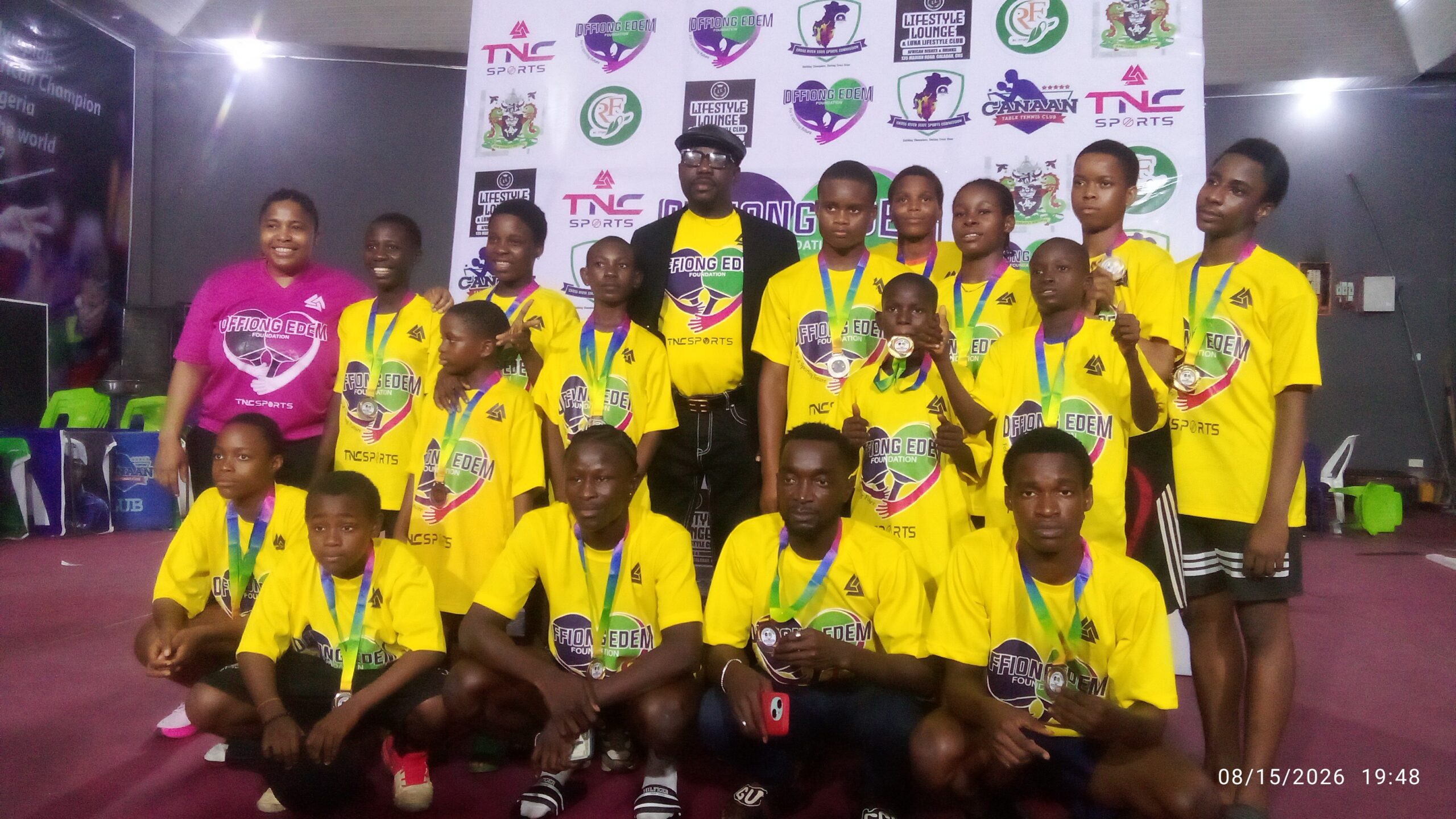
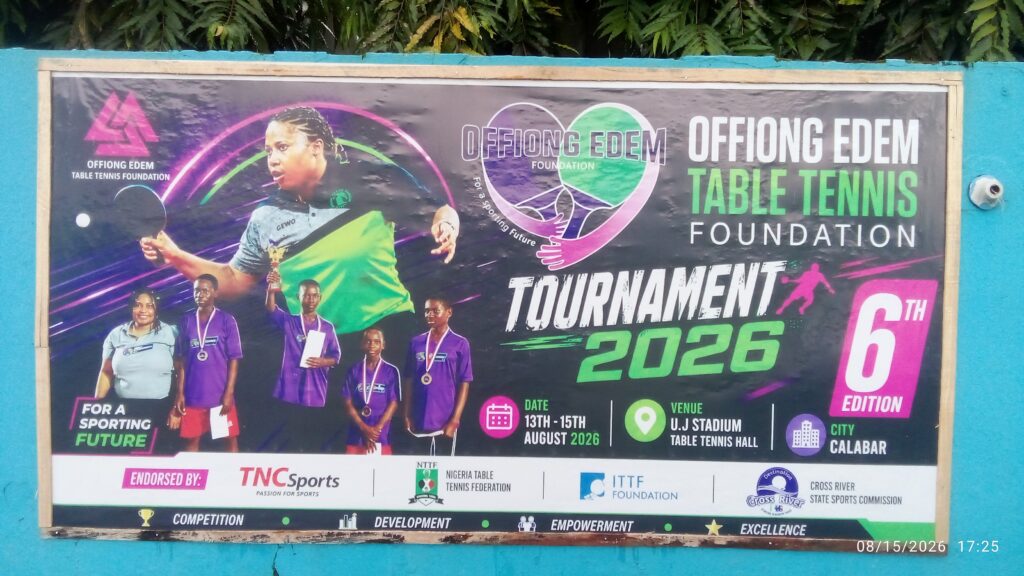
The concern emerged at the 6th Edition of the Offiong Edem Table Tennis Talent Hunt Programme, which ended at the Cross River State Table Tennis Indoor Sports Hall, U.J. Esuene Stadium, Calabar.
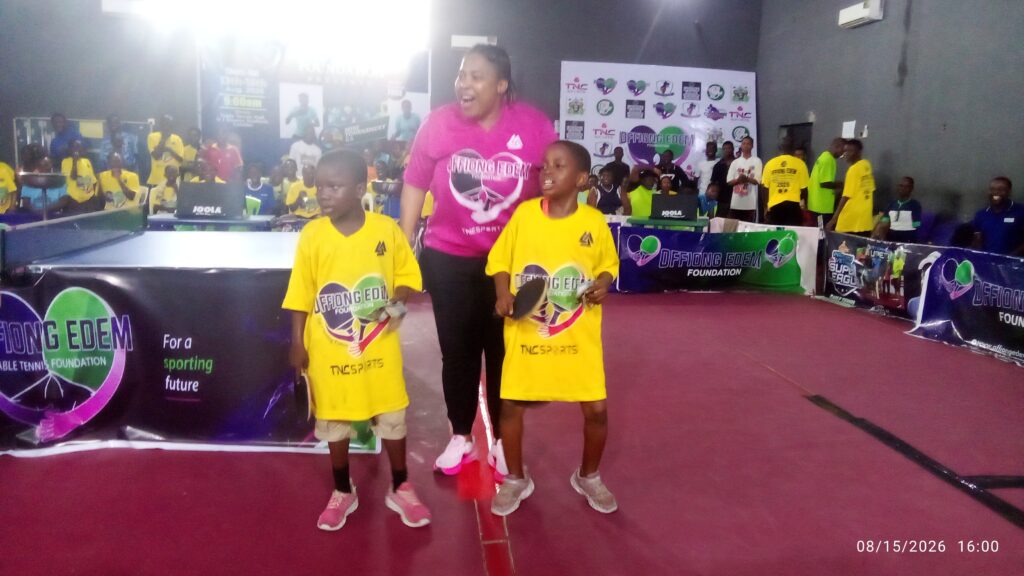
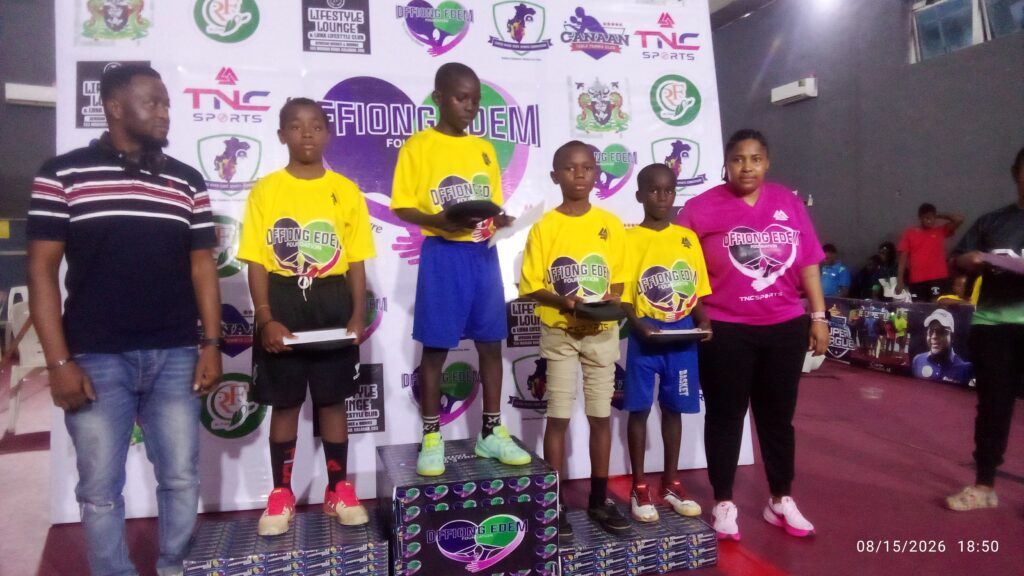
The championship, founded and organised by former African champion and five-time Olympian Offiong Edem, provided a platform for young players from the South-South and South-East regions to compete, develop their skills and attract attention to grassroots table tennis.
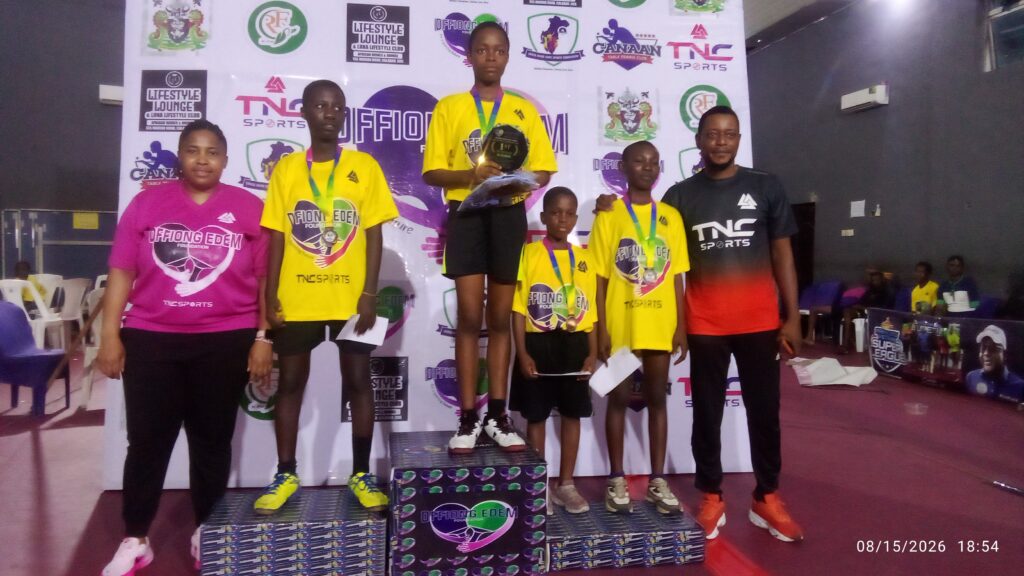
The competition produced Matthew John of Smash Trade Table Tennis Academy, Yenagoa, Bayelsa State, as overall champion after he defeated Bright Aniekan of Ultra Kings Table Tennis Academy, Uyo, Akwa Ibom State, four sets to nil in the senior boys’ final.
In the senior girls’ final, Elizabeth Emilike of Abia State defeated Vivian Ekpenyong Oku of Ultra King Table Tennis Club, Uyo, four sets to one.
Speaking on the motivation behind the championship, Edem said her passion for the sport and desire to give back to the game that launched her career informed the initiative.
“I worked hard on this one because it’s such a passion for the game,” she said, adding that seeing young players compete and enjoy themselves was a major source of satisfaction.
Edem said her long-term ambition was to identify and develop very young players, particularly those between nine and 15 years.
“I want to really see them and build that type, one of focus on very young grassroots, from 9 to 15. So this is my big dream,” she said.
She said Nigeria had considerable talent but identified funding as a major obstacle to the development of young players.
“Our only problem is funding,” Edem said, explaining that some players train extensively and possess the ability to compete internationally but lack the resources to travel and participate in competitions outside the country.
Edem also pointed to the decline in regular competitive opportunities available to young players compared with the period when she was developing her own career.
“We were very lucky when we started. We had the opportunity to play three, four, five tournaments in a year,” she recalled, contrasting that experience with the limited opportunities available to some young players today.
She said the situation was worsened by the absence of regular national camps and consistent training assessments that could help identify and advance promising players.
According to Edem, sports can provide young people with opportunities to build careers and achieve their ambitions if they receive the necessary support.
She said she hoped subsequent editions would attract players from across Nigeria, while the cash prizes would also continue to increase.
One of the sponsors, High Chief Cyril Anthony Asuquo, said the championship demonstrated the importance of returning to the grassroots to identify and nurture young sporting talents.
“I am very impressed because it’s not just about doing the festival, it’s about tapping from the roots,” Asuquo said.
Asuquo, Chairman of the Cross River State Community and Social Development Agency, said most of the participants were very young and could achieve greater things if their potential was properly harnessed.
He commended Edem for investing in the sport that contributed to her own career, describing the initiative as an example of giving back to one’s foundation.
Asuquo urged other sportsmen, women and sports philanthropists to emulate the gesture by organising competitions that would keep young people positively engaged while providing platforms for talent discovery.
He also encouraged sports administrators to go beyond athletes already participating in organised competitions and search for talents within communities.
“They should go and look for more people and bring,” he said, arguing that natural ability must be complemented by technical training.
He said young athletes also needed exposure to international standards, rules and techniques to compete effectively outside Nigeria without intimidation.
The Chairman of Ultra King Table Tennis Academy, Uyo, Mr. Mfon Monday Ekpo, also commended Edem for creating a platform for young players across the South-South and South-East.
Ekpo described the organisation of the grassroots programme as impressive and expressed willingness to partner with Edem in subsequent editions.
He also identified sponsorship as critical to sustaining the development of table tennis and called for greater involvement of corporate organisations, sports lovers and other stakeholders.
“It is not a one-man thing,” Ekpo said, stressing the need for increased awareness and collective support for table tennis.
Ekpo said young players required regular competitions and opportunities to test themselves against stronger opponents rather than remaining at the grassroots after demonstrating potential.
He also advocated stronger networking with table-tennis bodies outside Nigeria, saying international exposure would help young athletes understand different systems and improve their competitiveness.
The need for sustained development was reflected in the experience of Elizabeth Emilike, who began playing table tennis after joining an academy and went on to win the senior girls’ category.
Emilike said she initially doubted her chances after being moved from the Under-15 category into the women’s senior competition, where she faced more experienced players.
She recalled meeting the player who had defeated her in the previous year’s semi-final.
“When I met her, I was so scared that she’s going to beat me again this year. But I now beat her 3-1,” she said.
After defeating her previous conqueror, Emilike progressed to the final, where she faced another senior player she feared would beat her.
“I was also scared. But God just made it for me. I now won my match finally,” she said.
The Abia State player, who identified India’s Manika Batra as her role model, said she hopes to become Africa’s number one Under-15 player and establish herself among the top players in the senior category.
Her experience, alongside the views of the stakeholders, illustrates the potential that exists among young Nigerian players when they are given opportunities to compete and develop.
However, the interviews also point to a gap between discovering talent and sustaining its development.
While the championship provides competition and visibility, stakeholders say young players need continued funding, technical preparation, regular tournaments and exposure beyond Nigeria to progress towards elite competition.
Ekpo called for better planning of subsequent editions, including early communication with participating academies, opportunities for different categories and additional sponsorship for prizes.
Edem also said she expected future editions to become bigger, with the possibility of attracting players from across Nigeria.
For the stakeholders, therefore, the challenge goes beyond producing winners at individual competitions. It is about creating a sustainable pathway through which young players can move from grassroots discovery to professional and international competition.
Nigeria’s table-tennis talent may already be present at the grassroots; the bigger test is whether sustained investment, competition and exposure can give those talents the opportunity to reach their full potential.
Most Viewed Posts
- Supporting Siminalayi Fubara: Why Rivers People Deserve Continuity Of Purpose In 2027 – Dr William Omuna
- President Tinubu’s Achievements That Strengthen Case For Second Term – Amuna
- Just In: APC Announces Date For Presidential Primary, Fixes Nomination Form At ₦100m
- EFCC Arraigns Gombe Magistrate Over Alleged ₦1.4m Bribery
- Nationwide Relief as Dangote Reduces PMS Ex-Depot Price to ₦699