
Iran has denied holding negotiations with the United States after US President Donald Trump announced that fresh talks aimed at ending the conflict between the two countries would begin on Monday, August 3, 2026.
The Iranian Foreign Ministry’s response came after Trump said he had postponed plans for new military strikes on Iran to allow diplomacy another chance, continuing a pattern of alternating military threats with negotiations.
The United States and Iran have been at war since February 28, 2026, when the US and Israel launched coordinated strikes on Iran. Despite the conflict, intermittent diplomatic efforts have produced brief periods of relative calm.
Last week, Trump threatened to strike Iran “very hard,” with reports suggesting the United States was considering renewed attacks, including on Iran’s energy infrastructure.
However, on Saturday, August 1, 2026, the US president said he had held back because the framework for a possible agreement was beginning to emerge.
Iran, however, rejected Trump’s claim that direct negotiations were underway.
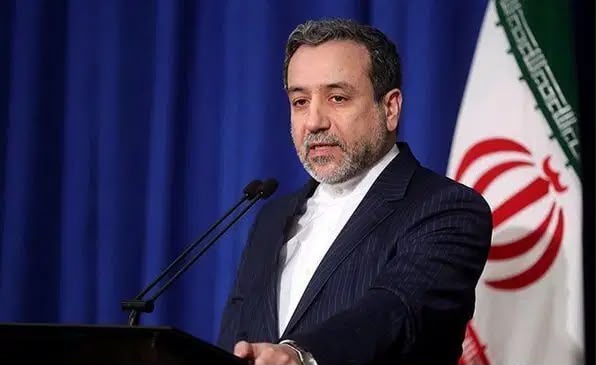
“We are not currently negotiating with the United States. Our negotiations are with Oman to secure passage through the Strait of Hormuz,” Iranian Foreign Ministry spokesman Esmaeil Baqaei said during a weekly press briefing on Sunday, August 2, 2026.
The Strait of Hormuz has become one of the major issues in efforts to end the conflict. Iran has restricted the movement of commercial vessels through the strategic waterway, insisting on controlling shipping routes and imposing transit fees, a position rejected by the United States.
According to Baqaei, Iran and Oman are close to reaching an agreement on a shipping route acceptable to both countries while safeguarding their respective security interests.
“We are now going to reach an understanding on a route acceptable to both sides, neither the northern route nor the southern route, but one that respects the sovereign rights of both sides and safeguards our national interests and security,” he said.
He, however, stressed that such an agreement would not amount to the full reopening of the Strait of Hormuz.
Also on Sunday, August 2, 2026, the United Kingdom Maritime Trade Operations Centre reported that a tanker off the coast of Oman heard an explosion nearby. The vessel and its crew were reported safe.
Speaking to reporters aboard Air Force One on the same day, Trump said the new round of talks with Iran would focus on the Strait of Hormuz and the country’s nuclear programme.
“Now what we’re doing is we’re talking to them in the form of a negotiation. It begins tomorrow afternoon,” Trump said, without disclosing the venue or participants.
He also claimed that Iran, Saudi Arabia, the United Arab Emirates and Qatar had urged him to suspend further military strikes, which he said would have been “the biggest attack since World War II.”
Iranian state media denied Trump’s claim that Tehran had requested a halt to military action.
Trump has repeatedly expressed optimism that a settlement is close, although previous ceasefire efforts have collapsed and hostilities resumed.
A ceasefire agreement reached last month, which was expected to facilitate the reopening of the Strait of Hormuz for global energy shipments, ultimately failed.
Meanwhile, Iranian lawmaker Hassan Ghashghavi, spokesman for the parliament’s National Security Commission, said on Sunday, August 2, 2026, that mediators were working to revive the US-Iran memorandum of understanding reached in June.
According to him, the agreement was intended as a foundation for broader peace negotiations and included provisions relating to the Strait of Hormuz.
“They know that the main issue and, in fact, the key to the matter right now is the issue of the Strait of Hormuz, so yes, there is an exchange of views,” Ghashghavi said.
Iranian President Masoud Pezeshkian also called for vigilance, writing on X that, “We must strive to compel the enemy to remain committed to what it has signed.”
AFP