

Lucky Obukohwo, Reporting
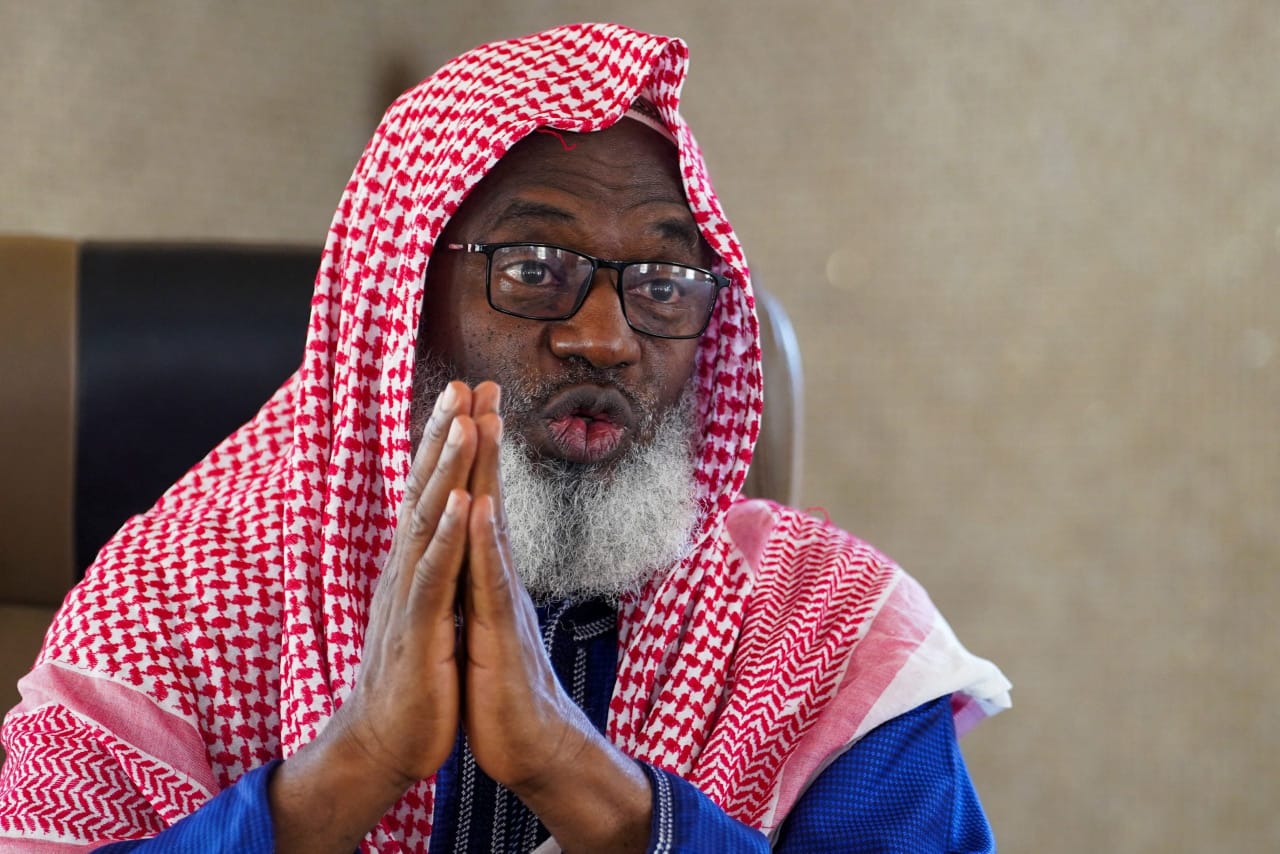
Renowned Kaduna based Islamic cleric, Sheikh Ahmad Gumi has slammed the Nigerian government for imbibing the western ideology of not negotiating with terrorist groups.
According to him, negotiation remains the most viable path to break the cycle of violence that the nation is soaked in.
He said this in his Facebook post on Wednesday.
Sheikh Gumi said that Nigeria would remain trapped in a circle of violence until its borders are secured, stressing that a porous border is antithetical to the nation’s fight against terrorism.
Gumi said despite priding itself on non-negotiation with those it tags terrorists, the United States government is currently locked in negotiations with Iran amid tensions over closure of the Strait of Hormuz.
He said the Nigerian government should take a cue from this to deploy negotiation as a strategy to end the years-long fight against terrorism.
His words, “Recently, Iran, in response to threats from the United States, declared that if its civilian infrastructure were attacked, it would retaliate by targeting power stations and desalination facilities in neighboring Gulf Arab states.
“In essence, the message is clear: if I cannot strike you directly, I will strike your closest allies as a form of deterrence. It is a warning that says—if you truly value your partners, then restrain your aggression.
“This reflects the grim reality of a world where no single actor holds a monopoly over the means of violence. Power is diffused, and retaliation is no longer confined to confrontation.
“Unfortunately, those perceived as superior powers often resist compromise. They hesitate to accept what they interpret as the humiliation of ‘defeat’ at the negotiation table. This is where Pakistan has stepped in—as a mediator helping to de-escalate tensions and prevent further escalation.
“Would Pakistan now be accused of aiding terrorism? Unlikely. Even the United States appears to recognize the gravity of the situation. The economic cost of prolonged conflict is becoming unbearable—not just for the parties involved, but for the global community at large.
“Now, consider this broader scenario in relation to the fight against terrorism in Nigeria.
“As long as Nigeria’s borders remain porous, and the government struggles to control the influx of illegal weapons, drugs, and explosives, the cycle of violence will persist.
“The scale of human and material loss is already overwhelming for ordinary citizens.
“This is no time for ego-driven or reactionary decisions—it is time to confront reality.
“When terrorists are targeted, they often retaliate by attacking the most vulnerable populations—the very people the government is meant to protect.
“Conversely, when the government intensifies its military response, civilians frequently suffer as collateral damage. Thus, the same group ends up bearing the consequences from both sides.
“A common question is: What do these terrorists actually want? This question lies at the heart of the issue—and misunderstanding it is one of the gravest mistakes people make. Without understanding the root causes of terrorism, any attempt to combat it risks being misguided. One must first comprehend the origins and motivations before designing an effective response. What violence creates, violence alone cannot resolve.”
Gumi said the way out of this deadlock may lie in what could be called a “Pakistan-style” circuit breaker—a peace broker capable of facilitating dialogue and reducing tensions.
“We should not be misled by the Western slogan, ‘We don’t negotiate with terrorists.’
“In practice, negotiations do occur. Even now, engagement is happening with Iran—labeled by some as part of an ‘axis of evil,’ while Iran, in turn, views the United States as its greatest adversary.
“The lesson is clear: lasting solutions require realism, dialogue, and strategic understanding—not just force”, he said.
`