

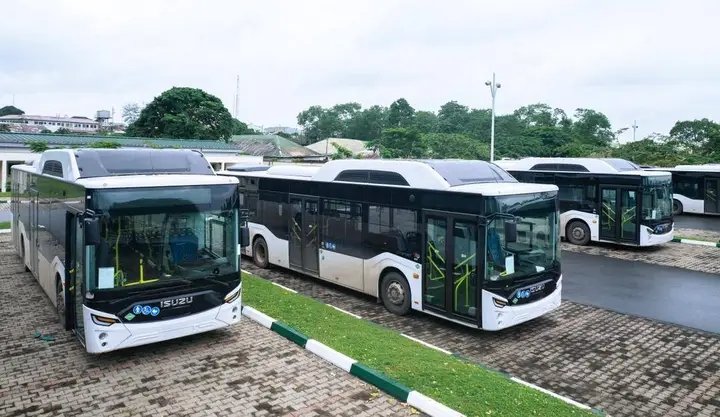
UYO, AKWA IBOM – The arrival of the first batch of Compressed Natural Gas (CNG) buses in Akwa Ibom State has generated mixed reactions among residents, with some applauding the initiative while others question the adequacy, sustainability and long-term impact of the transport project.
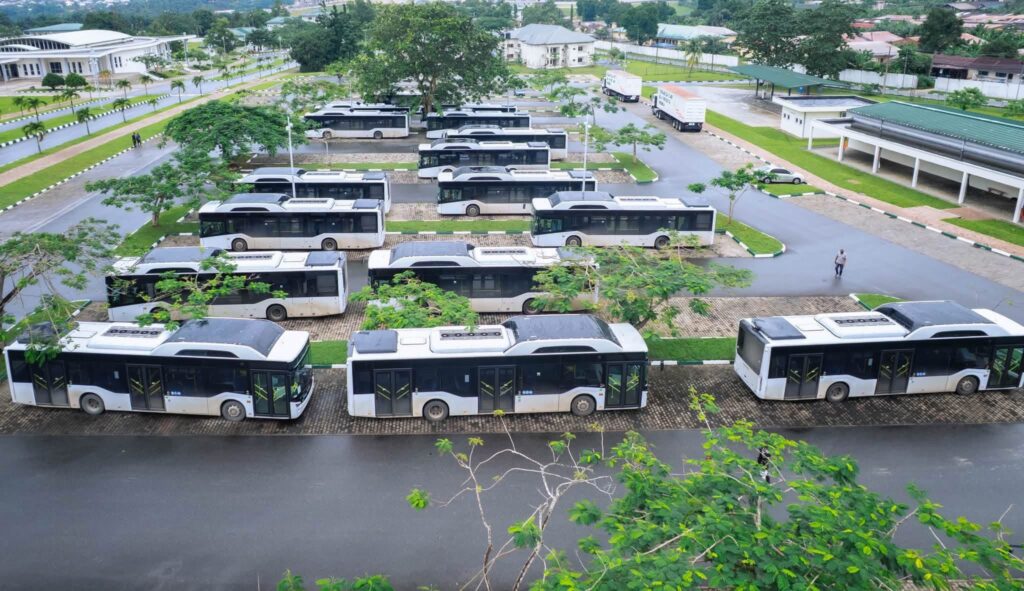
Through his social media handle, Governor Umo Bassey Eno had announced the arrival of 20 CNG buses, describing it as part of efforts by his administration to provide safer, more efficient and affordable transportation for residents.
The governor said the buses were the first batch of the 50 ordered by the state government, adding that supporting infrastructure, including a central bus terminal, bus stations and ticketing systems, were also being developed to ensure a smooth transport system.
However, while some residents described the initiative as a step in the right direction, others raised concerns over the number of buses, choice of technology, maintenance culture and readiness of infrastructure.
A social media user, John Nse, questioned the choice of CNG buses, arguing that other countries were moving towards electric vehicles.
“The way Akwa Ibom is going backward is always mind blowing. People are busy bringing in electric buses but our government is busy with CNG that is dead on arrival,” he said.
Another resident, Mathew Akerhoye, raised concerns over local manufacturing, asking why the state was not considering indigenous vehicle producers.
“Why buying Isuzu when Innoson is here? Why can’t we help ourselves?” he queried.
Some residents also questioned whether the number of buses would adequately serve the state’s 31 local government areas.
Henry Makata suggested that bus allocation should consider population differences among local government areas, saying, “The population of each local government should decide how many buses they get. 50 buses won’t be enough for the state.”
Similarly, another follower, Gumboi, argued that the number might be insufficient, saying, “50 buses for 31 LGAs. Is it fair or worth celebrating? That is almost one bus per LGA.”
Beyond quantity, some residents focused on the need for proper planning and expansion of the transport system.
Bishoptboy, a follower who said he had previously advocated for CNG buses and stations across the state, described the arrival as a positive development but urged the government to expand the fleet.
“Plan for at least 500 buses. 50 is a good starting point. You can have buses in Uyo, intercity buses, interstate buses. These will help reduce transport cost,” he said.
Another resident, Afe Ifiok IBOM, advised the government to consider a structured transport model that prioritises major routes and reduces dependence on smaller commercial vehicles.
He suggested that the buses should operate along routes connecting major towns such as Uyo, Ikot Ekpene, Oron, Eket, Abak, Etinan and Ibeno, while also improving road infrastructure and bus stops.
“The buses are designed for city use. We need good road markings, parking spaces and proper bus stops. Our internal roads need to be fixed,” he said.
Concerns were also raised about maintenance, with Odudu Wilson congratulating the state on the project but asking government to pay attention to sustainability.
“Congratulations to Akwa Ibom State, but my concern remains maintenance. Our maintenance culture is very poor,” he said.
Some residents, however, welcomed the initiative, describing it as a move capable of reducing transportation challenges if properly implemented.
.
One follower, Bigname Ini, said the project was “the way to go,” but urged government to also address electricity challenges affecting some areas.
The debate reflects broader expectations among residents that beyond acquiring buses, the state must ensure effective distribution, proper maintenance, reliable infrastructure and a transport system capable of serving the growing needs of the population.
As the buses prepare to enter service, attention is expected to shift from acquisition to implementation and whether the project will deliver the promised affordable and efficient transportation system.
Most Viewed Posts
- Supporting Siminalayi Fubara: Why Rivers People Deserve Continuity Of Purpose In 2027 – Dr William Omuna
- President Tinubu’s Achievements That Strengthen Case For Second Term – Amuna
- William Omuna Declares Bid For Rivers East Senate, Says It Deserves Senator Who Shows Up
- Budget Without Representation: Outrage as Senator Natasha Alleges Institutional Marginalisation – By Darlington Okpebholo Ray
- Praying for Survival: Inside Nigeria’s Unchecked Violence Against Christians — By Darlington Okpebholo Ray
One Response
I know that our government never meant well for us. Why going for Isuzu, what happrn to innocent, what happen to electric cars, will Isuzu bring mechanics to you, why enacts policies that will never favour a common man.
Accountability that we must get.