
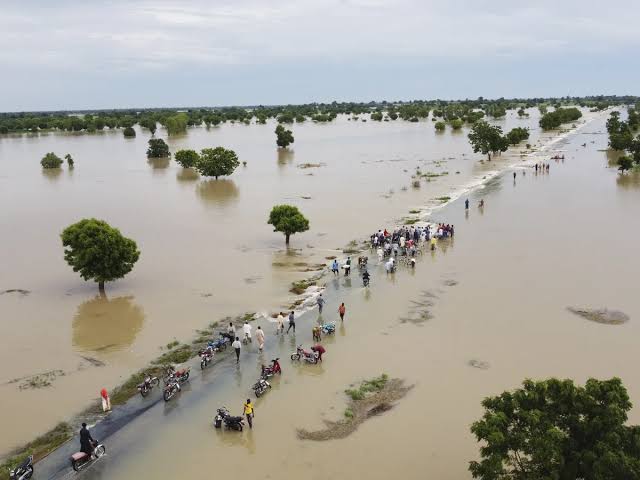
The Federal Government has warned that more than 500,000 communities across Nigeria could face varying levels of flooding during the 2026 rainy season.
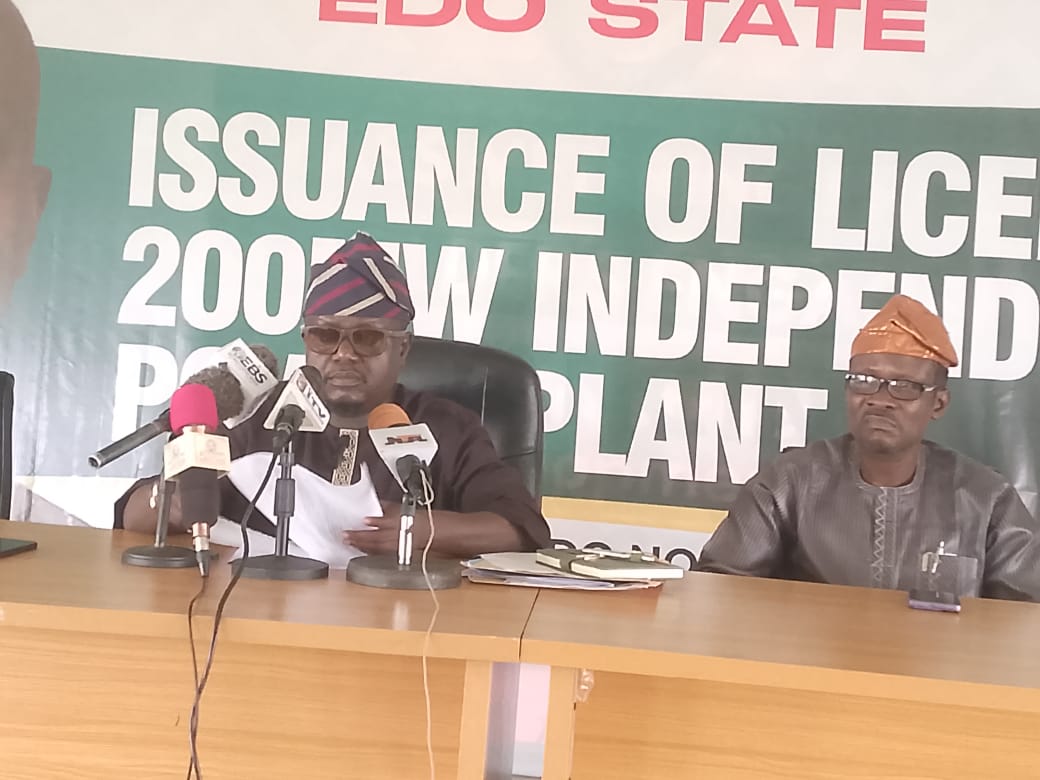
The warning was issued on Wednesday during the presentation of the 2026 Annual Flood Outlook in Abuja by the Minister of Water Resources and Sanitation, Joseph Utsev.
The outlook was prepared by the Nigeria Hydrological Services Agency, Nigeria Hydrological Services Agency (NiHSA), and highlights widespread flood risks across all regions of the country.
Officials say 33 states and the Federal Capital Territory fall within high-risk flood zones, affecting about 14,000 communities in 266 local government areas. A further 15,000-plus communities are expected to experience moderate flooding, while hundreds more face low-level flood risk depending on rainfall intensity and drainage conditions.
The report warns that the scale of risk cuts across all geopolitical zones, with particular concern for both inland and coastal areas.
The affected states include Abia, Adamawa, Anambra, Bauchi, Bayelsa, Benue, Borno, Cross River, Delta, Ebonyi, Edo, Enugu, Gombe, Imo, Jigawa, Kaduna, Kano, Kebbi, Kogi, Kwara, Lagos, Nasarawa, Niger, Ogun, Ondo, Osun, Oyo, Plateau, Rivers, Sokoto, Taraba, Yobe and Zamfara, as well as the FCT.
Officials warned that major Nigerian cities, including Lagos, Abuja, Ibadan, Port Harcourt, Kano, Benin City, Warri and Calabar, are likely to experience flash and urban flooding due to heavy rainfall and poor drainage systems.
Coastal areas such as Bayelsa, Rivers, Delta, Lagos, Ogun, Ondo and Cross River are also expected to face flooding linked to rising sea levels and tidal surges, with possible effects on fishing and river transport.
The minister, Mr Utsev, said the outlook was not just a scientific report but a warning tool meant to guide preparedness and reduce disaster impact.
He said the government was upgrading national hydrological monitoring systems and strengthening coordination with the Nigerian Meteorological Agency, Nigerian Meteorological Agency (NiMet), to improve accuracy in weather and flood prediction.
He urged state governments, local authorities and community leaders to act early by improving drainage systems, enforcing urban planning regulations and relocating vulnerable settlements where necessary.
“Preparedness remains the most effective strategy for reducing flood risks,” he said.
The Director-General of NiHSA, Umar Ibrahim Mohammed, said the 2026 forecast was developed using upgraded modelling systems and artificial intelligence tools designed to improve early warning accuracy.
He added that the agency had expanded its flood dashboard into a real-time decision-support system capable of tracking flood scenarios across the country.
NiMet said it would continue working closely with NiHSA to strengthen forecasting and support national disaster preparedness efforts.