

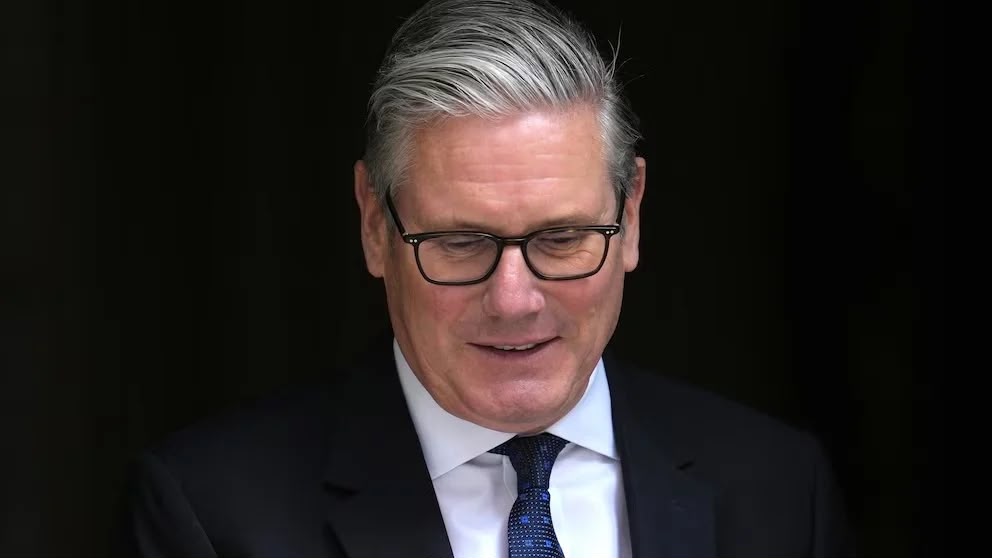
British Prime Minister Keir Starmer on Monday announced plans to ban children under the age of 16 from accessing social media platforms, citing growing concerns over the impact of online content on young people’s mental health and safety.
Speaking on June 15, 2026, Starmer said the proposed measure would block under-16s from using major social media platforms, arguing that many of the services expose children to harmful content and are deliberately designed to be addictive.
The planned ban will cover platforms including Snapchat, TikTok, YouTube, Instagram, Facebook and X. Messaging services such as WhatsApp will be exempt.
Starmer said his government hopes to secure parliamentary approval for the legislation by December, with implementation expected in the spring of 2027.
The Prime Minister also signalled tougher regulations for gaming and live-streaming services, describing them as spaces where children can be exposed to contact from unknown adults.
“Is there a situation in the offline world where you would just let your child pair up with a stranger? An adult that you don’t know about? No. So we’re taking action on that,” he said.
In addition to the social media ban, the government is considering measures such as overnight curfews and mandatory breaks from infinite scrolling for users under 18. Further details are expected in July.
Starmer said the proposal was partly inspired by Australia, which became the first nation to prohibit social media use for children under 16 in December 2025.
The announcement followed a government consultation that allowed British teenagers to test social media restrictions and app time limits. More than 116,000 submissions were received, making it the second-largest public consultation response in UK history.
According to the government, 83 per cent of participating parents said the risks of social media outweighed the benefits for children, while 91 per cent supported setting the minimum age for social media access at 16.
The proposal has, however, attracted criticism from some technology companies. A spokesperson for YouTube warned that a blanket ban could push children toward less regulated and potentially less safe online services.
The latest move comes a week after the UK government directed technology firms, including Apple and Google, to introduce tools preventing children from creating, sending or receiving nude images on their devices.
Officials said companies would be given three months to implement the safety measures or face legislation compelling them to activate the technology.
The government said the reforms are aimed at protecting children from coercion, abuse and sextortion, while also restricting access to pornography and making it more difficult for online predators to target minors.
Meanwhile, Canada recently introduced legislation seeking to bar children under 16 from holding social media accounts and requiring artificial intelligence chatbot services to limit the generation of harmful content. Similar restrictions have also been introduced in Indonesia, while several European countries are considering comparable measures.
According to data from the Internet Watch Foundation cited by the UK government, 91 per cent of online child sexual abuse reports recorded in 2024 involved self-generated content created by children.
AFP