

NIGERIA, CALABAR – To strengthen field mobility, the Cross River State Government has deployed 14 motorcycles to support patrol teams, particularly in remote and difficult-to-access communities.
The intervention targets logistical gaps that have historically limited rapid response, especially in riverine settlements and rural corridors with poor road infrastructure.
Officials said the motorcycles will enhance surveillance coverage, reduce response time, and improve the operational reach of grassroots security personnel across vulnerable locations.
While Calabar hosted the Southern District commissioning, parallel exercises took place in Ikom and Ogoja, covering the Central and Northern Districts respectively.
The coordinated rollout signals a statewide effort to institutionalise a decentralised, intelligence-driven security framework anchored on community participation and early threat detection.
Governor Bassey Otu, represented by his Chief of Staff, Emmanuel Ironbar, said the initiative reflects a policy shift toward preventive security.
He said the administration is prioritising local intelligence systems capable of identifying risks at source and limiting escalation into wider security breaches.
Mr Ironbar cited recent improvements in public safety indicators, noting that increased community engagement has contributed to a reduction in reported incidents across parts of the state.
“Communities that once experienced persistent anxiety are beginning to see stability return, largely due to coordinated intelligence and proactive interventions,” he said.
He added that expanding the Homeland Safety and Security Agency’s presence would consolidate these gains and deepen trust between residents and security operatives.
- Flood Tragedy: UNIZIK Primary School Pupil Dies in Awka
- 11 Terrorists Surrender, 4 Arrested As Security Forces Intensify Crackdown In Yobe
- Iran Will Never ‘Bend at the Knee’ — President Pezeshkian Tells Trump at UN
- Nigeria on High Alert as Ebola Outbreak Intensifies in Congo
- Weinstein Gets 15 Years in Prison for Sexual Assault
According to him, the agency is structured as a first-line intelligence platform, linking communities with formal security institutions, including the police and military.
He explained that operatives are expected to gather actionable information, coordinate preliminary responses, and escalate verified threats through established command channels.
Mr Ironbar emphasised that recruitment into the system will remain community-driven, with strict screening to ensure credibility, discipline, and local accountability.
“The integrity of this model depends on who participates in it. We are prioritising individuals with verifiable character and community trust,” he said.
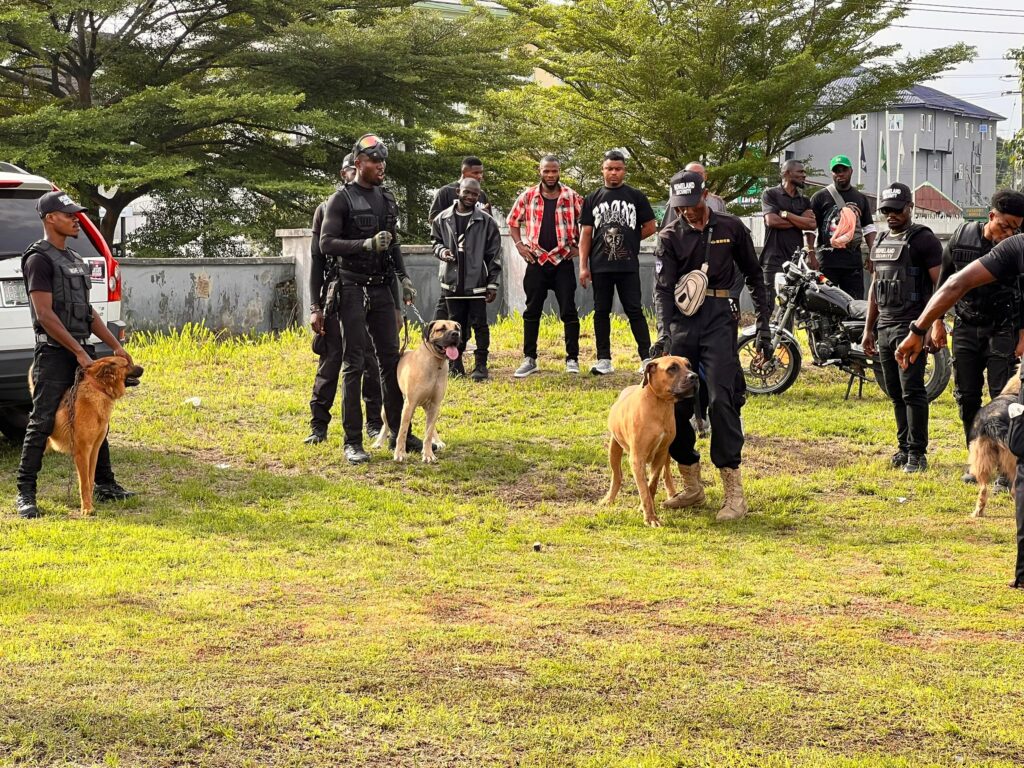
Providing operational data, the Southern District Director, Michael Nsan, disclosed that over 1,300 volunteers are currently supporting field operations.
He said the volunteers operate in structured units alongside conventional security agencies, contributing to surveillance, intelligence gathering, and coordinated interventions.
Mr Nsan linked the agency’s activities to a noticeable decline in crime during the last festive season, attributing the trend to improved information flow and rapid response coordination.
He noted that the agency has established specialised teams focused on surveillance, intelligence analysis, and field response, aimed at improving operational efficiency.
According to him, ongoing training and vetting exercises are preparing volunteers for formal integration into the agency’s workforce.
He added that the structured approach is designed to transition informal community vigilance into a regulated and accountable security support system.
Mr Nsan also pointed to increased public cooperation, stating that residents are now more willing to share information due to growing confidence in the agency’s responsiveness.
Security analysts say mobility assets such as motorcycles are critical in subnational security operations, particularly in terrains where conventional vehicles face access limitations.
They argue that improved mobility not only enhances patrol frequency but also strengthens deterrence by increasing the visibility of security presence in underserved areas.
Stakeholders at the event described the simultaneous commissioning across districts as evidence of a coordinated policy framework rather than isolated interventions.
They noted that uniform deployment could improve data sharing, operational consistency, and inter-district collaboration in addressing cross-boundary security threats.
However, analysts cautioned that sustaining the initiative will require continuous funding, maintenance of equipment, and institutional oversight to prevent operational decline.
They also emphasised the need for clear command structures and accountability mechanisms to manage the interface between volunteers and formal security agencies.
The government maintained that investment in community-based security remains central to its broader governance strategy, particularly in safeguarding economic and social activities.
Residents who attended the commissioning expressed cautious optimism, citing recent improvements in safety but calling for sustained implementation and transparency.
With the motorcycles now deployed and district offices operational, authorities expect measurable improvements in patrol efficiency, intelligence gathering, and emergency response across Cross River State.
Most Viewed Posts
- Supporting Siminalayi Fubara: Why Rivers People Deserve Continuity Of Purpose In 2027 – Dr William Omuna
- President Tinubu’s Achievements That Strengthen Case For Second Term – Amuna
- William Omuna Declares Bid For Rivers East Senate, Says It Deserves Senator Who Shows Up
- Budget Without Representation: Outrage as Senator Natasha Alleges Institutional Marginalisation – By Darlington Okpebholo Ray
- Praying for Survival: Inside Nigeria’s Unchecked Violence Against Christians — By Darlington Okpebholo Ray