

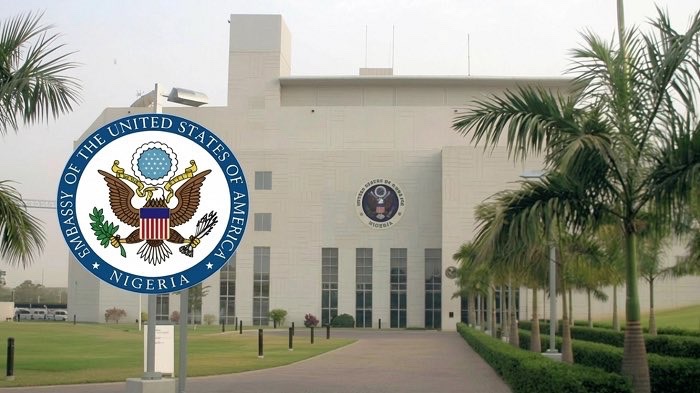
The United States has confirmed it has begun enforcing visa restrictions against Nigerians linked to violations of religious freedom, with a senior American official stating that the policy is already being executed.
Mark Walker, U.S. Principal Advisor for Global Religious Freedom, disclosed this in a post on X on Friday 10th April, referencing a U.S. Department of State statement announcing that a new policy under Section 212(a)(3)(C) of the Immigration and Nationality Act will allow the U.S. government to restrict visa issuance to Nigerians linked to religious freedom violations.
Walker stated: “In December, Secretary Rubio announced that the State Department will restrict U.S. visas for those who have directed, authorised, funded, significantly supported, or carried out violations of religious freedom. We have already executed this policy and we will continue to subject perpetrators to additional scrutiny.” He did not, however, name any of the Nigerians affected by the ban or their family members.
Walker added: “If you engage in persecution, you are not welcome in America. The United States is safer when we keep those responsible for religious persecution from entering our homeland.”
According to Peoples Gazette, the enforcement follows a State Department policy announced in December 2025 by Secretary of State Marco Rubio. According to the Department of State statement, “The United States is taking decisive action in response to the mass killings and violence against Christians by radical Islamic terrorists, Fulani ethnic militias, and other violent actors in Nigeria and beyond.”
The policy permits the State Department to restrict visa issuance to individuals who have directed, authorised, significantly supported, participated in, or carried out violations of religious freedom and, where appropriate, their immediate family members.
The announcement comes amid escalating U.S. legislative pressure over Nigeria’s security situation. Punch reports that in February, U.S. lawmakers also proposed sanctions against former Kano State governor Rabiu Musa Kwankwaso, naming him alongside Fulani-ethnic nomad militias in the Nigeria Religious Freedom and Accountability Act of 2026. The bill would require the U.S. Secretary of State to determine whether certain Fulani militias qualify as foreign terrorist organisations under American law.
The religious freedom visa ban is distinct from a separate, broader travel restriction. Since January 1, 2026, the U.S. has also been partially suspending visa issuance to Nigerian nationals alongside 18 other countries under Presidential Proclamation 10998, which covers nonimmigrant B-1/B-2 visitor visas, student and exchange visitor visas, and most immigrant visas.
According to the Open Doors 2026 Watch List, Nigeria accounts for 72 per cent of Christians killed worldwide, a figure cited repeatedly by U.S. lawmakers and officials in justifying the Nigeria-specific religious freedom measures.
The Nigerian government has consistently rejected the characterisation of the country’s security crisis as a religious war, describing it as a multifaceted issue involving criminal actors, competition over land and resources, and broader insecurity challenges.