

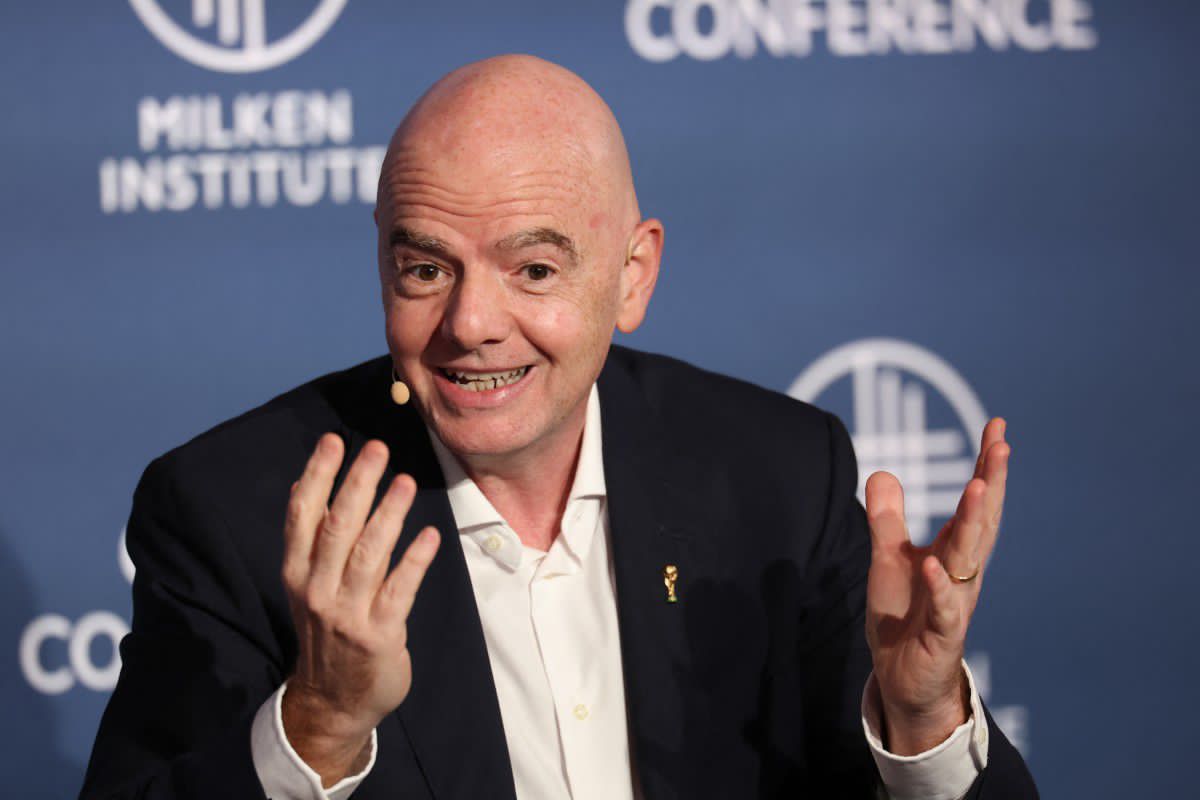
FIFA President Gianni Infantino on Tuesday, May 5, 2026, defended the high cost of World Cup tickets, insisting that FIFA must operate within market realities, including United States laws that permit ticket resales at significantly higher prices.
The governing body has faced strong criticism from fans, with Football Supporters Europe describing the pricing structure as “extortionate” and a “monumental betrayal.” The group escalated the dispute in March by filing a complaint with the European Commission over what it called excessive pricing.
Controversy intensified last week when FIFA’s official resale platform listed four tickets for the July 19 final in New York at over $2 million each.
Speaking at the Milken Institute Global Conference in Beverly Hills on May 5, 2026, Infantino said such figures reflect resale activity rather than official pricing.
“If some people put tickets on the resale market at $2 million, it doesn’t mean that’s the actual price, and it doesn’t mean anyone will buy them,” he said. “But if someone does, I’ll personally bring them a hot dog and a Coke to ensure they have a great experience.”
Fan groups have pointed to a sharp rise in official ticket prices compared to previous tournaments. At the 2022 World Cup in Qatar, the most expensive final ticket cost around $1,600, while the top tier ticket for the 2026 final is priced at about $11,000.
Infantino maintained that the increase is justified, saying FIFA must align with the United States entertainment market, where resale is common and often drives prices even higher.
“If tickets are priced too low, they will simply be resold at much higher rates,” he said, noting that some tickets are already being resold for more than double their original price.
He also revealed that demand for the 2026 tournament has surged, with more than 500 million ticket requests compared to fewer than 50 million combined for the 2018 and 2022 editions.
Despite the criticism, Infantino added that about 25 per cent of group stage tickets are priced below $300, arguing that even lower tier sporting events in the United States often cost as much or more.
“You cannot watch a college game in the United States for less than $300 and this is the World Cup,” he said.