
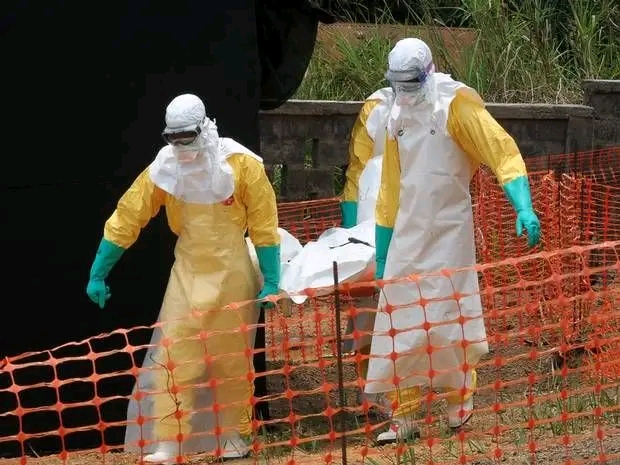
More than 900 suspected Ebola cases have been identified in the Democratic Republic of Congo, the World Health Organization has confirmed, including 101 laboratory-confirmed infections.
The country declared the outbreak on May 15, caused by the Bundibugyo strain of the virus a particularly dangerous variety for which no approved vaccine or treatments currently exist.
Congolese government figures put the toll at 904 suspected cases and 119 suspected deaths, though health officials warn the true figures are likely far higher, as the outbreak went undetected for some time before authorities responded. The first known case is believed to have been a nurse who fell ill on April 24 in the city of Bunia, in Ituri province.
The outbreak is currently active across three DRC provinces; Ituri, North Kivu, and South Kivu with the epicenter located in a “highly insecure” area where ongoing armed conflict has fueled a severe displacement crisis.
WHO Director-General Tedros Adhanom Ghebreyesus has warned that the violence is forcing people to flee, including health and humanitarian workers, severely hampering contact tracing and early detection efforts. A “security incident” last Thursday in Ituri, in which medical tents and supplies were set on fire, “significantly jeopardized” response operations on the ground.
The WHO has declared the outbreak a Public Health Emergency of International Concern (PHEIC), though it does not yet meet the criteria for a pandemic emergency.
The Africa Centers for Disease Control has warned that 10 neighboring countries including Uganda, Rwanda, Kenya, and South Sudan now face elevated transmission risk.
Five cases linked to the DRC outbreak have already been confirmed in Uganda’s capital, Kampala, and the CDC has announced enhanced travel screening and entry restrictions to prevent the virus from reaching the United States, where the overall risk to the public remains low.