

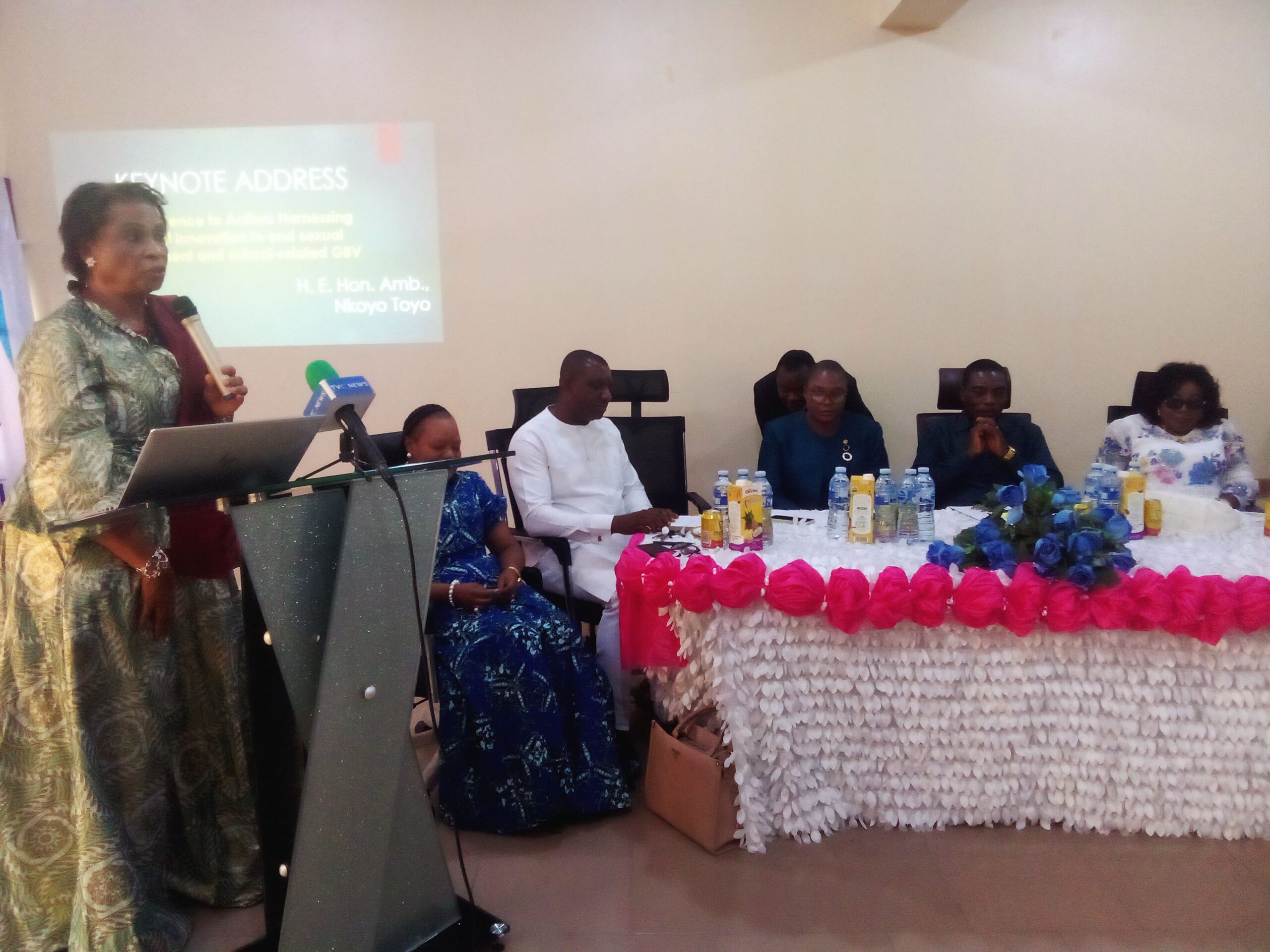
CALABAR, NIGERIA – Hon. Amb. Nkoyo Esu Toyo, Chief Executive and Founder of Gender & Development Action, on Tuesday led a strong call for coordinated action against school-related gender-based violence during a major intervention in Calabar.
She delivered the keynote address at a multi-stakeholder event hosted at the College of Medical Sciences, University of Calabar, where stakeholders launched a digital reporting platform to improve abuse reporting systems among students.
Toyo said technology must move beyond innovation into impact, stressing that institutions must adopt secure and responsible tools to address gender-based violence effectively.
“Technology has the power to provide meaningful solutions, but we must also be prepared to use it in a responsible and secure manner,” she said.
Silence Remains Central Barrier to Reporting
Toyo identified silence as a major obstacle preventing victims from reporting abuse, noting that stigma, fear, and institutional distrust continue to isolate survivors across higher education institutions.
“Too many individuals carry their experiences in isolation, unable or unwilling to speak out,” she said, emphasizing the urgency of dismantling entrenched cultural norms.
She explained that the newly launched digital platform aims to break that silence by offering safe, anonymous reporting channels for victims, witnesses, and concerned individuals.

“When people report abuse, it leads to action, and action builds stronger systems,” Toyo added, linking reporting to accountability and institutional reform.
Digital Reporting Platform Strengthens Response Systems
Developers designed the platform to ensure anonymity, facilitate timely reporting, and connect survivors to healthcare, legal, and psychosocial support services, stakeholders confirmed at the launch.
The system integrates multi-sector collaboration, enabling coordinated responses from health professionals, law enforcement agencies, and civil society organizations operating within Calabar metropolis.
Toyo described the initiative as a transformative tool capable of amplifying marginalized voices and strengthening institutional responses to gender-based violence.
“This platform gives a voice to those who have long remained silent,” she said, noting that increased reporting will expose perpetrators and deter abuse.
Institutional Frameworks Must Support Innovation
The keynote speaker urged higher institutions to strengthen existing gender policies and align them with digital innovations aimed at improving reporting and response systems.
She noted that frameworks already exist within institutions but require stronger implementation, accountability, and integration with emerging technological solutions.
“These structures provide a foundation, but they must work alongside new digital initiatives to achieve real impact,” Toyo said during her address.
- 2027: Wike Takes Aim At Peter Obi Over Visits To IDP Camps
- 2027: NDC To Restore Petrol Subsidy – Says Kwankwaso
- Media Heavyweights To Honour Late PillarToday Editor At Funeral
- 2027: Tinubu Deserves Second Term For Taking Difficult Decisions, Says Wike
- Fuel Scooping Turns Deadly As Tanker Explosion Burns 10 In Edo
Stakeholders emphasized that institutional commitment remains critical to sustaining the platform and ensuring its effectiveness across campuses.
Youth Engagement and Safe Spaces Prioritized
Toyo stressed the importance of creating safe spaces for young people, noting that many students lack the support systems needed to report abuse or seek help.
“If you ask me, this is really about how we speak to our young people,” she said, linking communication gaps to continued silence among victims.
She explained that students often face harassment, exploitation, and pressure but remain silent due to fear of consequences or lack of trust in institutional processes.
“That is exactly the problem we are facing today,” she said, calling for youth-centered interventions and supportive environments within academic institutions.
Understanding Barriers to Reporting Remains Critical
The former Lawmaker challenged stakeholders to examine underlying factors that discourage reporting, describing them as key to solving the gender-based violence crisis.
“Why are so many young people silent? What are the factors that keep them from speaking out?” she asked, urging deeper analysis beyond policy frameworks.
She said addressing these barriers requires cultural transformation, including changes in societal attitudes, education systems, and family structures that influence behavior.
Experts at the event agreed that understanding these variables will improve intervention strategies and enhance reporting mechanisms.
GBV Linked to Broader Societal and Governance Issues
Toyo linked gender-based violence to broader systemic challenges, including inequality, weak governance, and institutional failures that persist across sectors.
“At the heart of every nation lies a foundation, and that foundation determines whether there will be peace or conflict,” she said, emphasizing structural responsibility.
She argued that societal problems such as corruption create environments where abuse thrives, stressing the need for accountability at individual and institutional levels.
“Corruption is not just a government problem; it is a societal problem,” she added, calling for collective action to address systemic issues.
Action-Oriented Response Urged Across Sectors
The Ambassador stressed the need for immediate, practical action, warning against prolonged discussions without measurable outcomes in addressing gender-based violence.
“We cannot keep talking without doing,” Toyo said, urging stakeholders to implement solutions that protect victims and strengthen response systems.
She emphasized that policies must reflect real-life experiences and respond effectively to survivors’ needs, ensuring relevance and sustainability.
“If the system is not working, then the system must be redefined,” she added, highlighting the need for continuous reform.
Platform Positioned for Wider Impact Beyond Calabar
Stakeholders said the digital reporting platform will extend beyond Calabar metropolis, with plans to scale its use across Cross River State and other regions in Nigeria.
They noted that the initiative combines research, technology, and collaboration to address school-related gender-based violence comprehensively.
Organizers expressed optimism that increased reporting will strengthen institutional accountability and improve access to care and justice for survivors.

Toyo described the initiative as a model capable of influencing national strategies on gender-based violence prevention and response.
Final Call for Collective Responsibility
Concluding her address, Toyo urged students, institutions, and the wider public to take responsibility for addressing gender-based violence and supporting survivors.
“To the students, your voice matters. To the institutions, your responsibility is clear. To the public, this is our collective problem,” she said.
She stressed that silence must no longer be tolerated, urging individuals to speak out and support victims through available reporting platforms.
“Silence is no longer an option,” Toyo said, emphasizing that real change begins when individuals act and institutions respond effectively.
Event Context and Broader Intervention
The event formed part of a broader intervention led by public health researchers focused on strengthening GBV care providers’ competencies and improving reporting among students.
Activities included media awareness campaigns, capacity-building training for healthcare workers, inter-campus rallies, and student sensitization workshops across Calabar metropolis.
Organizers said the initiative represents a significant step toward addressing gender-based violence through evidence-based, technology-driven solutions in Nigeria’s higher education sector.

They added that sustained collaboration among stakeholders will remain essential in ensuring long-term success and measurable impact of the intervention.
Most Viewed Posts
- Supporting Siminalayi Fubara: Why Rivers People Deserve Continuity Of Purpose In 2027 – Dr William Omuna
- President Tinubu’s Achievements That Strengthen Case For Second Term – Amuna
- Just In: APC Announces Date For Presidential Primary, Fixes Nomination Form At ₦100m
- EFCC Arraigns Gombe Magistrate Over Alleged ₦1.4m Bribery
- Court Schedules Trial of Former Anambra Governor in ₦4bn Case