

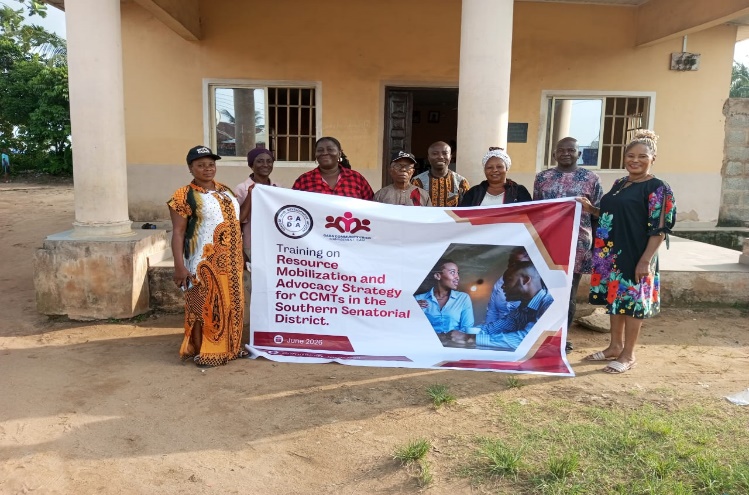
CROSS RIVER, CALABAR – Seven communities in Cross River State have developed action plans to strengthen and sustain community-based response to Gender-Based Violence (GBV), following a capacity-building programme organized to equip local volunteers with resource mobilisation and advocacy skills.
Facilitated by Gender and Development Action (GADA), Community Crisis Management Teams (CCMTs) from Ikang, Ikot Oyom, Obufa Esuk, Nyanghasang, Akwa Ikot Effangha, Odukpani Central and Akai Efa communities were trained on strategies to mobilize local resources and support survivors of GBV.
The training focused on enabling communities to move beyond reliance on external support by identifying and using available local resources, building partnerships and strengthening advocacy for GBV prevention.
During the programme, participants were introduced to different areas of resource mobilisation, including material resources, technical support, community networks, partnerships, political goodwill and collaboration with relevant stakeholders.
The facilitator explained that sustainable GBV response requires communities to recognize opportunities within their environment and engage stakeholders who can contribute towards protecting survivors and preventing violence.
The CCMT members were also trained on advocacy approaches, including engaging civil society organisations, health facilities, government institutions, traditional leaders, religious bodies and other community actors.
According to GADA, the communities developed work plans covering activities from June to December 2026, with focus on sensitisation campaigns, advocacy visits, stakeholder engagements and awareness programmes in schools, markets, churches and other public spaces.
The Ikot Oyom CCMT, for instance, outlined plans to conduct GBV sensitisation programmes in health facilities, schools, markets and religious centres, alongside advocacy visits to local authorities.
Similarly, the Ikang CCMT planned engagements with the Bakassi Local Government Council, traditional institutions, market women groups and schools as part of efforts to strengthen community response mechanisms.
GADA said the training also emphasized the importance of documentation, accountability and evidence-based advocacy, noting that CCMT members were encouraged to keep records of cases handled, referrals made, justice outcomes and awareness activities carried out in their communities.
The organisation stated that the outcome of the training was improved understanding among CCMT members on sustainability strategies, with all participating communities committing to implement their action plans.
“The communities are expected to take ownership of GBV prevention efforts by mobilising available resources and creating support systems that can continue beyond project funding,” GADA said.
The initiative is expected to strengthen grassroots involvement in GBV prevention and create safer communities through locally driven solutions.
Most Viewed Posts
- Supporting Siminalayi Fubara: Why Rivers People Deserve Continuity Of Purpose In 2027 – Dr William Omuna
- President Tinubu’s Achievements That Strengthen Case For Second Term – Amuna
- Just In: APC Announces Date For Presidential Primary, Fixes Nomination Form At ₦100m
- EFCC Arraigns Gombe Magistrate Over Alleged ₦1.4m Bribery
- Court Schedules Trial of Former Anambra Governor in ₦4bn Case