
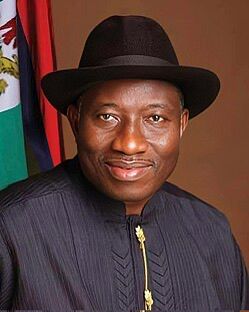
Former President, Dr Goodluck Jonathan, has defended his time in office, stating that he did his best despite inevitable challenges and mistakes.
His remarks came in response to recent comments by former Vice President Atiku Abubakar, who, during an interview on ARISE TV’s Prime Time, described Jonathan as inexperienced and blamed that for shortcomings during his administration.
Atiku, a presidential aspirant on the platform of the African Democratic Congress, had said Jonathan’s perceived inexperience affected his ability to effectively manage national affairs, particularly during periods of crisis.
Reacting while speaking at the 2025 Association of Retired Career Ambassadors of Nigeria awards ceremony in Abuja, Jonathan said no leader governs without making mistakes.
“So not too long ago, a very senior politician said, ‘Oh, Jonathan was too young and probably that’s why he made mistakes.’
“If I made mistakes, yes — nobody who becomes a governor or a president will say they did not make mistakes. All human beings must make mistakes,” he said.
Jonathan, who became president in 2010 at the age of 53 and left office in 2015 at 58, questioned the notion that age determined leadership capacity.
“I became president at 53… and they say I was too young. Must it have been 100 years before I ran the affairs of the state?” he asked.
The former president maintained that, despite the challenges, he made decisions in the best interest of the country and highlighted key diplomatic achievements recorded during his tenure, including Nigeria’s election to the United Nations Security Council.
“If I were so naive, I don’t think I would have been able to navigate that process,” he added.
Beyond the exchange, Jonathan also addressed broader regional concerns, stressing that political stability remains essential for economic development in West Africa.
He warned that instability across member states continues to hinder progress within the Economic Community of West African States, noting that the bloc’s original vision of economic cooperation cannot be realised without strong democratic systems.
“We cannot progress economically if we are very unstable politically,” he said.
Jonathan further noted that efforts to enforce democratic norms within ECOWAS often clash with the principle of national sovereignty, making consensus among member states difficult.
He called on West African leaders to work collectively to strengthen political stability across the region, adding that sustainable economic integration depends on functional democratic institutions.
The former president also urged Nigerian diplomats to document the country’s foreign policy experiences to guide future administrations.
Paying tribute to the founders of ECOWAS, including former Head of State Yakubu Gowon, Jonathan praised their vision in establishing the regional bloc in 1975, describing it as bold and necessary for regional integration.
Gowon, who was honoured at the event, reflected on the formation of ECOWAS, attributing its success to collective efforts by governments and civil servants across the region.
He described the initiative as a product of post-war diplomacy and regional cooperation, stressing that its achievements should be credited to all who contributed to its establishment.
Also speaking, the President of the Association of Retired Career Ambassadors of Nigeria, Joe Keshi, highlighted the importance of diplomacy in maintaining stability and fostering partnerships, noting that such contributions often go unrecognised.
The Chief of Army Staff, Lt Gen Waheed Shaibu, also paid tribute to Gowon, describing him as a symbol of visionary leadership and national unity, and commended the association for promoting discourse on international affairs.